Introduction
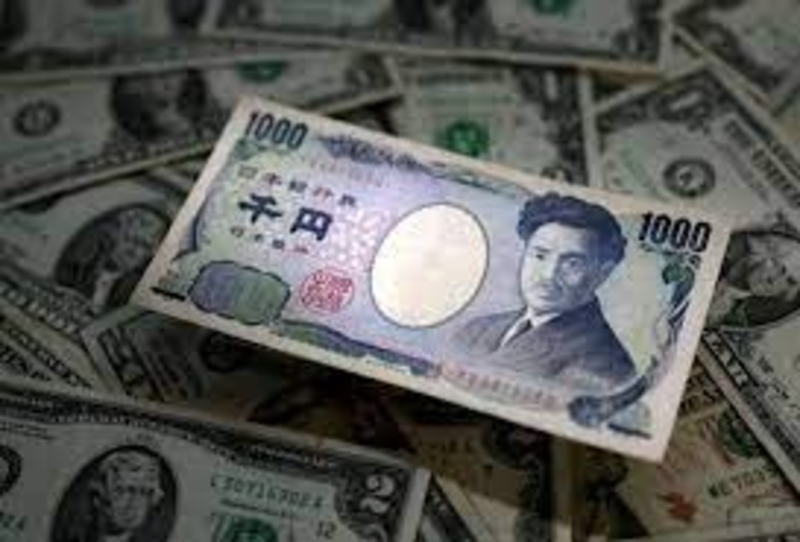
The Japanese yen fell to a two month low against the US dollar on Friday after Japan’s finance minister issued a fresh warning about excessive currency volatility. The decline highlighted persistent pressure on the yen as investors continued to favor the dollar, supported by steady US yields and stronger economic data. The dollar climbed to 150.8 yen in late Asian trading, the weakest level for Japan’s currency since early August, according to data reported by Reuters.
Market participants interpreted the statement from Finance Minister Shunichi Suzuki as a signal that Tokyo is prepared to intervene if speculative movements intensify. However, traders noted that verbal warnings have so far done little to halt the yen’s slide, given the wide interest rate gap between the United States and Japan. The Bank of Japan’s continued ultra loose monetary policy remains a key factor driving capital outflows, as investors seek higher returns abroad.
Government Concerns and Policy Signals
Japanese officials reiterated their commitment to ensuring currency stability amid heightened global market volatility. Speaking to reporters in Tokyo, Suzuki said that authorities are watching market movements “with a high sense of urgency” and will take appropriate action if speculative trading distorts fundamentals. His comments followed several days of yen depreciation that pushed the currency near levels historically associated with government intervention.
Analysts at Bloomberg noted that the yen’s weakness reflects deep structural challenges rather than short term speculation. Japan’s inflation has moderated but remains slightly above the central bank’s two percent target, complicating any move to tighten policy. The government has expressed concern that imported inflation, driven by a weaker yen, could erode household purchasing power. However, raising interest rates too quickly could stall Japan’s fragile recovery and hurt exporters that depend on competitive exchange rates.
The Bank of Japan’s Dilemma
The Bank of Japan (BOJ) continues to face the difficult task of balancing inflation control with economic support. Governor Kazuo Ueda has maintained that monetary easing will continue until wage growth becomes sustainable. Despite gradual increases in pay, real incomes remain under pressure, and household spending has shown signs of slowing. The central bank’s bond purchase program, designed to keep long term yields low, has further widened the yield gap with the United States and Europe.
Financial analysts at Trading Economics pointed out that the BOJ’s current yield curve control policy effectively caps the ten year Japanese government bond yield near one percent. In contrast, the US ten year Treasury yield remains above four percent. This differential continues to drive capital flows out of Japan, weakening the yen despite official rhetoric. Unless the BOJ signals a policy shift, traders expect the currency to remain under pressure through the end of the year.
Market Reactions and Investor Sentiment
The yen’s latest decline sparked volatility across Asian financial markets. Equity indexes in Tokyo and Seoul fell slightly as investors digested the possibility of foreign exchange intervention. Japan’s benchmark Nikkei 225 closed 0.7 percent lower, weighed down by declines in exporters and technology shares. Meanwhile, the dollar index held firm around 104.2, supported by robust US labor data and higher Treasury yields.
Foreign exchange strategists at ING noted that while the Ministry of Finance has a history of direct intervention, authorities prefer to reserve such actions for sharp or disorderly movements rather than gradual depreciation. Traders are watching for signs of official buying in the Tokyo market, which could include the Bank of Japan selling dollars from its reserves to support the yen. Market watchers recall that a similar operation in late 2022 temporarily strengthened the currency by nearly five yen against the dollar before momentum faded.
Broader Economic Implications
A persistently weak yen has both positive and negative effects on Japan’s economy. On one hand, exporters benefit from improved price competitiveness, boosting profits for major manufacturers such as Toyota, Sony, and Panasonic. On the other hand, the cost of imported goods and energy rises, straining consumers and small businesses. This trade off complicates fiscal and monetary coordination, particularly as the government seeks to balance wage support with inflation control.
Recent data from the Ministry of Internal Affairs and Communications showed that consumer prices rose 2.6 percent year on year in September, led by higher food and energy costs. While inflation is moderating from its peak earlier this year, households remain cautious about spending. Economists at MarketWatch warned that a prolonged period of yen weakness could undermine domestic confidence if wages fail to keep pace with rising living costs.
Global Market Context
The yen’s performance must also be viewed in the broader context of global currency trends. The US dollar has remained strong against most major peers, supported by resilient economic growth and steady interest rates. European currencies have softened as inflation cools, while emerging market currencies have faced pressure from risk aversion and high US yields. In this environment, the yen’s depreciation reflects both domestic policy settings and global capital flows.
Reuters reported that Japan’s finance ministry is maintaining close contact with its counterparts in the United States and South Korea to coordinate potential responses to excessive currency volatility. Such coordination is designed to avoid sudden shocks in the foreign exchange market that could destabilize regional trade. However, analysts caution that joint intervention is unlikely unless the yen’s fall accelerates sharply.
Outlook for the Yen
Looking ahead, traders expect the yen to remain range bound between 148 and 152 per dollar in the near term. Much will depend on the tone of the Bank of Japan’s next policy meeting and any changes to its yield curve control framework. If the central bank signals tolerance for slightly higher bond yields, it could offer modest support for the currency. Conversely, renewed dollar strength or higher US yields could push the yen to new lows.
Economists from the IMF noted that Japan’s experience highlights the challenges facing central banks that maintain ultra loose policies in a tightening global environment. While the yen’s weakness has not yet triggered financial instability, prolonged depreciation could prompt capital outflows that test the country’s resilience. For now, market sentiment remains cautious, with investors watching both economic data and official statements for signs of policy recalibration.
Conclusion
The yen’s recent weakness underscores the complex tradeoffs facing Japanese policymakers as they navigate global monetary divergence. With the Federal Reserve maintaining higher interest rates and the Bank of Japan holding firm on its easing stance, the currency gap is unlikely to narrow quickly. Verbal interventions may slow speculative movements but cannot offset structural forces driving capital flows.
For Japan, stability in foreign exchange markets remains critical to sustaining its recovery. Policymakers will need to balance domestic growth priorities with the need to maintain credibility in global financial markets. Whether through coordinated action or gradual adjustment, the challenge ahead lies in ensuring that currency management supports both economic stability and long term competitiveness.