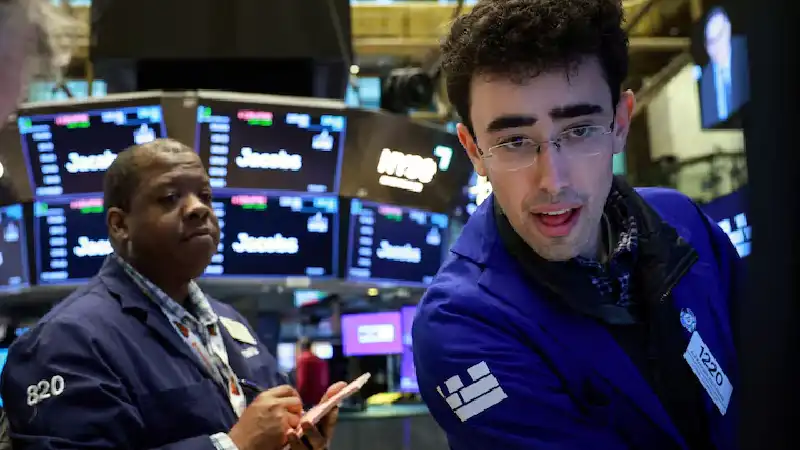
Wall Street indexes moved lower in a volatile trading session as investors weighed rising geopolitical risks and shifting interest rate expectations. The Dow Jones Industrial Average, S and P 500, and Nasdaq all ended in negative territory as markets struggled to hold onto earlier optimism. Sentiment remained fragile as traders reacted to headlines surrounding the Middle East conflict, with oil prices climbing again and reinforcing concerns about inflation. The combination of geopolitical uncertainty and tighter financial conditions pushed investors toward caution, limiting appetite for risk across major equity sectors.
The decline came as US Treasury yields rose, adding further pressure on equities already facing uncertainty from global developments. A weak demand signal in a government bond auction highlighted investor concerns about future rate direction, while expectations for monetary policy shifted rapidly. Markets that had previously priced in rate cuts are now adjusting toward a more restrictive outlook, with growing bets that borrowing costs could remain elevated or even rise further. This shift has weighed on growth stocks in particular, contributing to sharper losses in technology and communication sectors.
Market participants described the environment as highly reactive and driven by short term signals. Investors are closely monitoring both energy prices and geopolitical developments, with each new update influencing trading decisions. Rising oil prices have revived fears of persistent inflation, creating what some analysts describe as a stagflation risk where growth slows while costs increase. This scenario presents a difficult backdrop for equities, as higher input costs can reduce corporate margins while elevated interest rates limit expansion and investment across sectors.
Despite the broader decline, certain sectors showed resilience as energy stocks benefited from higher oil prices. The sector outperformed the market, reflecting the direct link between geopolitical tension and commodity demand. At the same time, concerns resurfaced within private credit markets as some investment firms introduced limits on fund withdrawals amid increased redemption requests. These developments added another layer of caution, highlighting potential stress points in financial markets beyond traditional equities and reinforcing the broader risk averse tone.
The economic backdrop is also becoming more complex as recent data points to slowing business activity in the United States. Rising input costs tied to energy and supply disruptions are beginning to affect corporate operations, suggesting that the impact of the conflict is spreading into the real economy. This has led investors to reassess earnings expectations and growth projections, particularly for sectors sensitive to consumer demand and global trade conditions. The interplay between economic data and geopolitical risk is creating a challenging environment for forecasting market direction.
Additional market movements reflected mixed signals within individual stocks and sectors. Financial firms saw selective gains linked to potential deal activity, while consumer facing companies faced pressure amid uncertainty. At the same time, major banks adjusted their outlook for the broader market, with some raising long term targets based on strong earnings expectations despite near term risks. This divergence highlights the contrast between short term volatility and longer term confidence in corporate performance and economic resilience.
Recent trading patterns also show how quickly sentiment can shift based on headlines related to both conflict and policy. Markets briefly recovered earlier in the session on hopes of diplomatic progress, only to retreat again as reports suggested further military escalation. This pattern underscores the sensitivity of financial markets to geopolitical developments, where optimism and caution can alternate rapidly within a single trading day. Traders are increasingly focused on real time information, making market movements more dynamic and less predictable.
For now, investors remain cautious as they navigate a landscape shaped by rising energy costs, uncertain monetary policy, and ongoing geopolitical tension. The outlook for equities will depend on how these factors evolve, particularly whether inflation pressures continue to build and how central banks respond. With markets reacting to both economic data and global developments, volatility is expected to remain elevated in the near term as investors seek clearer direction.