Introduction
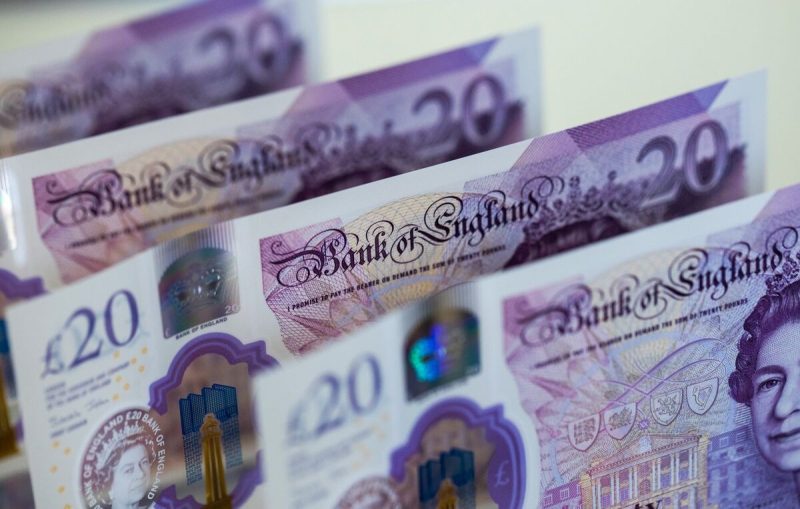
The British pound fell to its lowest level in two months on Friday as a resurgent US dollar gained strength against nearly all major currencies. The move came after stronger than expected US labor market data and renewed expectations that the Federal Reserve would keep interest rates higher for longer. In contrast, soft UK economic indicators and growing speculation of a Bank of England rate cut weighed heavily on sterling.
According to market data cited by Reuters, the pound declined to 1.245 against the dollar in late London trading, marking its weakest level since early August. The slide reflected diverging economic narratives between the United States and the United Kingdom, as investors adjusted their portfolios in favor of the dollar’s relative stability and yield advantage. Traders at Bloomberg reported that hedge funds increased long positions on the greenback while trimming exposure to UK assets.
Diverging Monetary Policies
The strength of the dollar this week largely stems from the Federal Reserve’s continued emphasis on inflation control. Recent comments from Fed Chair Jerome Powell reaffirmed the central bank’s cautious stance, suggesting that the current level of interest rates will remain restrictive until price pressures convincingly moderate. Market expectations for a rate cut before March 2026 have now fallen below 30 percent, supporting the dollar index near the 104 level.
Meanwhile, the Bank of England faces a different challenge. UK growth data for September showed stagnation, and inflation, although easing, remains above the central bank’s 2 percent target. Several Monetary Policy Committee members have recently hinted that rates could start to decline early next year if wage growth and services inflation continue to cool. Analysts at Trading Economics noted that this policy divergence between Washington and London is likely to persist through the first half of 2026, maintaining downward pressure on sterling in the short term.
Economic Indicators Reinforce the Dollar’s Edge
A key reason behind the pound’s weakness is the consistent outperformance of the US economy relative to the UK. September’s US jobs report, released on Thursday, showed a gain of 185,000 nonfarm payrolls, exceeding consensus forecasts and reaffirming labor market resilience. Average hourly earnings also rose 0.3 percent month over month, indicating steady income growth and ongoing consumer demand.
In contrast, UK economic releases this week painted a more fragile picture. The Office for National Statistics reported that industrial production contracted by 0.4 percent in August, and business investment intentions fell sharply. While consumer confidence improved slightly, retail sales volumes remained subdued as households continued to grapple with higher energy and mortgage costs. Economists at MarketWatch commented that without a rebound in manufacturing or exports, sterling could struggle to sustain any significant recovery against the dollar in the near term.
Global Risk Appetite and Investor Behavior
Beyond fundamentals, global risk sentiment also played a role in shaping currency flows. Equity markets in Europe and Asia retreated modestly following comments from US policymakers suggesting that fiscal deficits remain a long-term concern. Investors shifted toward safe-haven assets such as the dollar, US Treasuries, and gold. The euro, yen, and sterling all weakened as a result, extending the dollar’s broad-based rally for a third consecutive week.
Foreign exchange strategists at ING noted that the dollar’s resilience in October reflects a combination of steady yields and defensive positioning ahead of potential trade tensions. While not driven by panic, the shift underscores investor caution as political and economic uncertainties rise globally. As liquidity tightens into the final quarter of the year, high-yielding and risk-sensitive currencies may continue to face selling pressure relative to the dollar.
Impact on UK Bonds and Equities
Sterling’s decline coincided with moderate weakness in UK bond and equity markets. The yield on the ten-year gilt slipped to 4.07 percent, while the FTSE 100 lost 0.8 percent, led by declines in banking and consumer goods stocks. The weaker pound offered limited support to exporters, as overall demand prospects in Europe and the United States remain uncertain. Portfolio managers described the move as a rotation rather than a selloff, with investors reallocating from domestic equities into global fixed-income assets.
The Bank of England’s upcoming policy meeting is now expected to attract heightened attention. Any shift in tone or acknowledgement of economic softness could reinforce sterling’s downtrend. Analysts from the IMF and World Bank have recently emphasized that maintaining market confidence is essential as the UK navigates a delicate balance between inflation control and fiscal prudence. In this environment, communication will be key to preventing further depreciation.
Comparing the Pound’s Performance with Other Majors
The pound’s trajectory this week closely mirrored movements in other European currencies, though its losses were more pronounced. The euro traded around 1.065 against the dollar, marginally lower but relatively stable compared with sterling’s sharper decline. The Swiss franc held firm near parity, supported by safe-haven inflows. Meanwhile, the Japanese yen briefly strengthened after hints of official intervention, before giving up gains as US yields rebounded.
Analysts at Bloomberg Economics highlighted that the dollar’s renewed momentum has created a feedback loop where weaker currencies prompt additional hedging demand. The phenomenon tends to amplify short-term dollar rallies, even when fundamental changes are modest. For the pound, this dynamic is exacerbated by the UK’s persistent current account deficit and limited export diversification, which make the currency more vulnerable to shifts in global sentiment.
Long Term Outlook for Sterling
Despite near-term weakness, some strategists remain cautiously optimistic about sterling’s medium-term prospects. HSBC economists project a gradual recovery toward 1.29 by mid-2026, assuming the UK avoids recession and inflation continues to decline. This outlook depends heavily on coordinated fiscal management and stable energy markets. A prolonged downturn in global trade or renewed commodity shocks could easily derail such a scenario.
The Bank of England’s monetary policy trajectory will also play a decisive role. Should the central bank choose to hold rates longer than anticipated, or if US inflation softens significantly, the yield gap between the two economies could narrow. That would provide partial relief to the pound. Until then, volatility is likely to persist, with traders watching for every data release that might hint at the next policy move.
Conclusion
The pound’s drop to a two-month low underscores the importance of relative economic strength in determining currency valuations. As the United States maintains its growth advantage and the Federal Reserve signals a steady policy stance, the dollar remains the preferred asset for investors seeking stability and yield. The UK’s weaker data and uncertainty about monetary policy timing have compounded pressure on sterling, leaving it exposed to further downside risk.
Over the coming weeks, market participants will focus on inflation figures, labor data, and any new commentary from central bank officials. Unless the UK surprises with stronger growth indicators, the currency’s outlook will likely remain subdued. For now, the dollar’s combination of solid fundamentals and investor confidence continues to dominate global currency markets.