Introduction
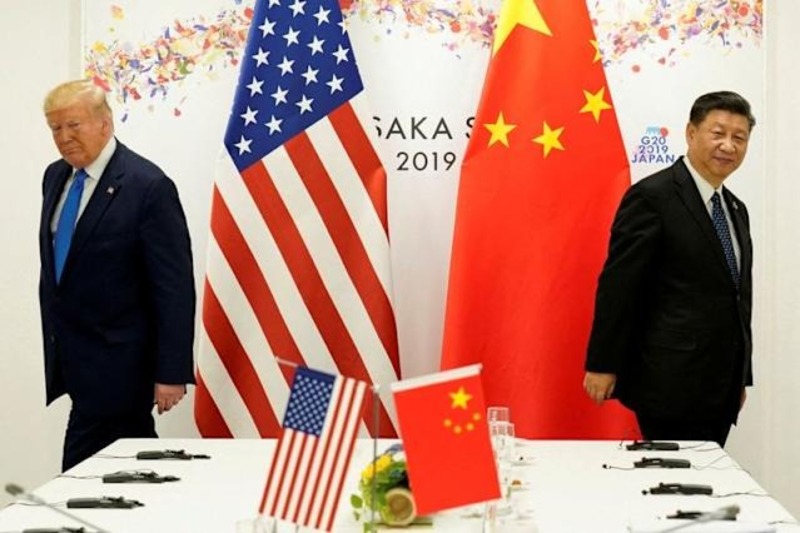
The US dollar weakened on Friday as renewed trade tensions between Washington and Beijing unsettled global markets. Former President Donald Trump’s remarks about imposing massive new tariffs on Chinese imports sent traders rushing out of dollar positions, anticipating potential retaliation from China and fresh volatility in global trade flows. The dollar index (DXY), which measures the greenback against six major currencies, fell 0.43 percent to 104.17, pulling back from a two-month high reached earlier this week.
Market analysts described the move as a knee-jerk reaction to uncertainty surrounding future US-China trade relations. Investors, who had largely priced in stable macroeconomic data and a steady Federal Reserve stance, are now revisiting risk assumptions. The slide in the dollar reflected a flight toward commodities, Asian equities, and select European currencies as traders searched for safe or opportunistic assets amid tariff-related concerns.
The Tariff Threat and Market Reactions
Trump’s comments came during a campaign event in Pennsylvania, where he vowed to implement what he called a “massive reset” in trade policy. He suggested that all Chinese imports could face tariffs “far higher” than existing levels if he returns to office. The remarks immediately affected currency markets, with Asian trading sessions showing a sharp reversal in early dollar gains.
According to Reuters, traders in Hong Kong and Singapore reported heavy selling in dollar-yuan pairs following the comments, pushing the offshore yuan to 7.29 against the dollar before stabilizing slightly. The euro and the pound gained ground, benefiting from a softer dollar tone, while the Japanese yen strengthened modestly after intervention signals from Tokyo. Market strategists at ING and MUFG described the move as a sign of “renewed sensitivity” to political rhetoric after months of stability in major currency pairs.
Central Bank Caution and Policy Balancing
The Federal Reserve has maintained a balanced outlook on inflation and employment, but sudden political shocks often complicate its strategy. Officials speaking anonymously to Bloomberg indicated that renewed trade friction could disrupt progress toward price stability, especially if tariffs lift import costs. A more expensive import basket typically feeds into headline inflation, forcing central banks to weigh price stability against economic growth.
For the Fed, the immediate concern is whether tariff news will shift inflation expectations or consumer sentiment. Market-based inflation forecasts rose slightly on Friday morning, suggesting that investors see some risk of supply-chain pressures returning. However, policymakers have not signaled any imminent change in interest rate direction. Fed watchers expect the central bank to stay on hold through the end of the year unless data shows a clear change in inflation momentum.
Dollar Correlations with Commodities and Bonds
Commodity traders also reacted swiftly to the tariff news. Oil prices dipped by nearly one dollar per barrel as traders anticipated slower trade flows and reduced manufacturing demand. Gold, often viewed as an inflation hedge, rose to 2,405 dollars per ounce in late trading. Analysts at Trading Economics noted that the move resembled 2018 patterns, when tariff announcements triggered similar defensive positioning across asset classes.
US Treasury yields softened as well, with the ten-year note dropping to 4.28 percent from 4.34 percent. Lower yields tend to pressure the dollar because they make US assets less attractive to foreign investors. In this environment, the dollar’s decline was not only a political reaction but also a reflection of shifting yield spreads. Traders cited growing interest in emerging market bonds, especially in Asia, where currencies are seen as undervalued relative to fundamentals.
Reactions from China and Regional Markets
Beijing’s initial response to the renewed tariff threat was restrained. China’s Ministry of Commerce released a brief statement emphasizing the importance of “mutual respect and pragmatic dialogue.” Nevertheless, Chinese equities declined slightly, and commodity-linked currencies such as the Australian and New Zealand dollars experienced higher volatility. The People’s Bank of China maintained its midpoint rate near 7.12 but continued using open-market operations to manage liquidity.
In the broader region, Asian financial centers tracked the dollar’s movement closely. The Singapore dollar gained 0.3 percent, while the South Korean won climbed 0.5 percent as traders interpreted the softer dollar as a temporary reprieve. Analysts at the World Bank warned that persistent tariff uncertainty could curb regional investment, particularly in technology exports. The institution’s October outlook stressed that protectionist measures risk fragmenting supply chains, which could have lasting effects on currency dynamics.
European and Emerging Market Perspectives
In Europe, the euro’s recovery was supported by moderate consumer price data and stabilizing bond markets. The European Central Bank reiterated that its rate policy would remain data-driven, and some members noted that the euro’s relative strength could help cushion imported inflation. In the United Kingdom, the pound regained momentum following better-than-expected industrial output data, although broader sentiment remains tied to US developments.
Emerging markets, meanwhile, experienced mixed effects. The Mexican peso and Brazilian real gained modestly as investors sought higher-yielding assets, while the Turkish lira remained under pressure due to persistent inflation concerns. Economists at the IMF noted that a prolonged dollar decline could reduce imported inflation for developing economies but might also reignite capital inflows that complicate domestic monetary control. The Fund’s October policy brief described this balancing act as “a renewed stress test for macroprudential frameworks in open economies.”
Traders Eye Next Week’s Economic Data
Looking ahead, traders are preparing for a busy week of economic releases, including US consumer sentiment data, Chinese export figures, and eurozone industrial production. Each dataset will be scrutinized for evidence of slowing trade momentum. Analysts at MarketWatch expect volatility to remain elevated until markets get clarity on whether the tariff rhetoric will translate into policy.
Volatility indices have risen moderately, suggesting that hedging demand is increasing. FX options implied volatility on major pairs climbed about 8 percent in early Friday trading. Market participants are also monitoring capital flow data to assess whether global investors are diversifying away from dollar assets. Some institutional reports hint at portfolio reallocation toward alternative instruments that track diversified baskets of reserve currencies.
Subtle Shifts in the Global Currency Landscape
Behind the day-to-day volatility, a gradual transition is unfolding in global reserve preferences. Central banks in Asia and parts of the Middle East are reportedly exploring cross-border settlement mechanisms that reduce exposure to any single reserve currency. While the dollar remains dominant, the infrastructure for multi-currency settlement systems is expanding, aided by distributed ledger experimentation and pilot programs involving asset-backed digital instruments.
These developments resemble earlier initiatives that sought to complement the dollar system with more regionally anchored digital assets. Institutional desks view such instruments as a hedge against political risk and a tool for liquidity management. Though adoption remains limited, the concept underscores the market’s appetite for diversification. In this context, the dollar’s short-term weakness could accelerate interest in alternatives that promise stability through collateralized backing rather than direct sovereign guarantee.
Conclusion
The dollar’s decline on Friday illustrates how political commentary can swiftly alter currency sentiment even in the absence of new economic data. Markets remain highly sensitive to trade policy uncertainty, and any shift in tariff expectations tends to echo through commodities, bonds, and global equity indexes. The current episode reflects the intricate connections between politics, inflation expectations, and central bank credibility.
Whether the dollar rebounds or continues to drift lower will depend on how seriously investors take the possibility of new tariffs and how other nations respond. If rhetoric hardens into policy, the effects could extend far beyond currency markets, reshaping capital flows and investment strategies worldwide. For now, traders are recalibrating positions and watching the Federal Reserve’s tone for clues about how the central bank might navigate another round of trade-induced turbulence.