Market participants rarely advertise what truly concerns them. In recent months, attention has been shifting away from short term price narratives toward something less visible but more critical. Settlement resilience is becoming a growing focus across digital markets. The ability to move value reliably under pressure is now seen as essential infrastructure rather than a secondary consideration.
This change is subtle but meaningful. Traders, institutions, and liquidity providers are adjusting workflows to ensure capital remains accessible even when conditions tighten. Instead of relying solely on legacy systems or volatile instruments, many are evaluating stable digital settlement tools that can operate consistently across platforms. The emphasis is on continuity, not excitement.
As markets head deeper into 2026, uncertainty around policy, liquidity cycles, and global coordination continues to influence behavior. In this environment, settlement reliability is no longer assumed. It is being tested, compared, and quietly prioritized.
Resilience Replaces Speed as the Key Performance Metric
For years, speed dominated discussions around digital finance. Faster transactions were treated as a competitive edge. Today, resilience is taking precedence. Market participants are asking whether settlement systems function smoothly during congestion, stress, or rapid repositioning.
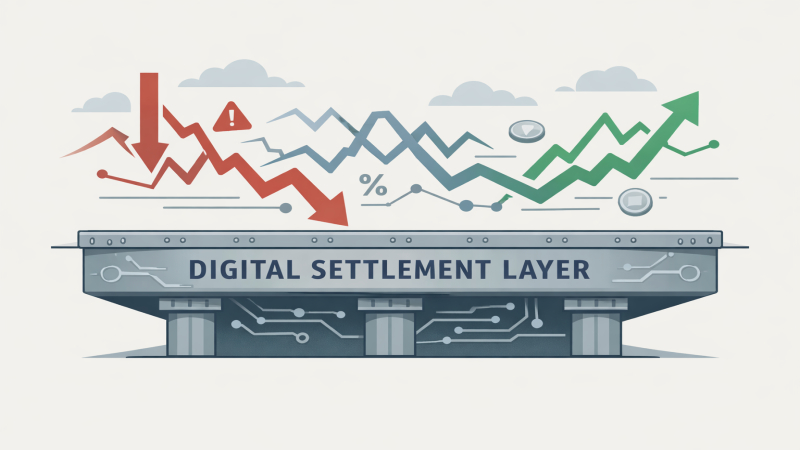
Stable digital settlement layers are drawing attention because they are designed to minimize disruption. Predictable value transfer and consistent processing matter more than marginal gains in transaction time. This shift reflects maturity rather than caution. Markets are optimizing for survival and continuity instead of raw performance.
Liquidity Providers Adjust Risk Management Frameworks
Liquidity providers are among the most sensitive to settlement reliability. Delays or failures can expose them to unintended risk. As a result, many are adjusting internal frameworks to include stable settlement tools as part of their operational stack.
These tools allow liquidity to be moved or parked without amplifying exposure during volatile periods. The behavior is not defensive. It is preventative. By reducing dependency on fragile processes, liquidity providers maintain tighter control over capital flow, especially during market transitions.
Cross Platform Activity Reinforces the Need for Stability
Digital markets now operate across multiple platforms, chains, and environments. Capital often needs to move between them quickly and without loss of value. This complexity increases the importance of stable settlement layers that can function as neutral connectors.
Cross platform usage patterns show growing reliance on stability focused tools for intermediate settlement. Rather than converting back to traditional rails, participants keep value within digital systems while managing risk. This reinforces the role of stable settlement infrastructure as a backbone rather than a fallback.
Interpreting Market Confidence Through Settlement Behavior
Settlement behavior is increasingly viewed as a confidence indicator. When participants continue to move value smoothly despite uncertainty, it suggests trust in the infrastructure. Stable settlement layers provide a window into this dynamic because their usage reflects intent rather than speculation.
Analysts are paying closer attention to settlement volumes and routing choices. A rise in stable settlement activity without corresponding stress signals often indicates preparation and discipline. This data helps separate structural adjustments from emotional market reactions.
Conclusion
Digital settlement resilience is becoming a quiet obsession because markets have learned where real risk hides. Stability focused settlement layers are being evaluated as essential infrastructure that supports liquidity, confidence, and continuity. As uncertainty persists, the ability to move value reliably may matter more than any single price movement. This shift signals a deeper evolution in how digital markets define strength.