U.S. bond markets are signaling a new phase of repricing as investors adjust expectations for Federal Reserve policy and inflation dynamics. After months of uncertainty, yield curves are beginning to reveal how markets perceive the next chapter of monetary adjustment. The shifts in Treasury yields highlight an inflection point where liquidity, inflation, and policy credibility converge.
The dollar’s recalibration mirrors this process. As rates stabilize and inflation cools, investors are reassessing the balance between growth and tightening. The direction of yields through midyear will determine how global capital positions itself across currencies, with the dollar once again serving as the central reference point for pricing risk and opportunity.
Federal Reserve Guidance and Market Expectations
The Federal Reserve’s approach to policy normalization remains the key influence behind recent yield movements. After several quarters of tightening, officials have turned their focus toward sustaining stability while maintaining control over inflation expectations. Markets now anticipate a more flexible stance that blends caution with readiness to react if inflation trends reverse.
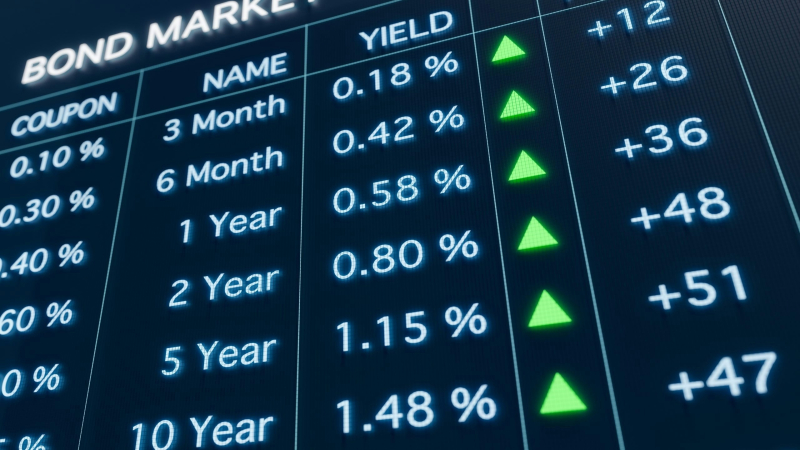
This cautious balance is reflected in Treasury yields. Short-term instruments have stabilized near recent highs, suggesting investors expect policy to remain restrictive for a while longer. Longer-term yields, however, are showing signs of easing as the market prices in slower growth and moderated inflation. The resulting flattening in the yield curve indicates confidence in long-term price control but continued vigilance on policy timing.
For institutional investors, this environment demands precision. Positioning along the curve now depends less on broad policy narratives and more on tactical responses to each data release. Employment, wage growth, and consumer sentiment figures are now driving short-term adjustments, with every new report recalibrating expectations for future rate decisions.
The dollar’s strength reflects this data sensitivity. As yields adjust, foreign demand for U.S. assets fluctuates accordingly. A higher-for-longer stance tends to attract inflows into Treasury securities and dollar holdings, while softer inflation readings can lead to temporary corrections. This interplay between yields and currency flows defines the rhythm of global markets heading into the midyear phase.
Yield Curve Structure and Liquidity Trends
The shape of the U.S. yield curve offers important clues about underlying market confidence. An inverted curve, where short-term rates exceed long-term ones, often signals caution over future growth. While inversion persists, the degree of steepening or flattening in recent weeks suggests that investors see potential stabilization ahead. This adjustment reflects both improving inflation data and anticipation of more measured Federal Reserve communication.
Liquidity conditions in the bond market have also improved. Trading volumes in Treasury bills and notes remain robust, supported by consistent institutional participation and strong international demand. Repo markets and money-market funds continue to absorb excess cash, keeping short-term funding rates anchored. This liquidity backdrop provides stability for both bond valuations and the broader dollar outlook.
Meanwhile, yield differentials between the United States and other major economies have narrowed slightly. This has eased upward pressure on the dollar, particularly against currencies with similar inflation trajectories. However, the dollar remains underpinned by deep capital markets, transparent policy, and the reliability of Treasury issuance. Even modest yield adjustments in the U.S. can have amplified global effects because of the dollar’s reserve status.
From a policy standpoint, midyear represents a potential transition point. If inflation continues to decline, the Federal Reserve could begin signaling a gradual shift from tightening to neutral guidance. Such communication often leads to a repricing of risk assets, with investors rotating from defensive positions into longer-term securities and equities. The resulting movement along the curve could define the financial tone for the second half of the year.
Global Implications and Investor Strategy
Changes in U.S. yields ripple through every major asset class. Global bond managers adjust portfolios to hedge against currency volatility, while central banks reassess reserve allocations to maintain balance between yield and stability. The synchronized influence of the dollar and U.S. rates means that even marginal changes in policy perception can reshape global liquidity patterns.
Emerging-market currencies, in particular, remain sensitive to these dynamics. When U.S. yields rise, borrowing costs increase for dollar-linked debt, pressuring weaker balance sheets. Conversely, a pause in rate hikes tends to relieve funding stress and attract inflows back to riskier markets. This cyclical relationship underscores the global importance of how investors interpret Treasury signals.
At the same time, technology and data analytics are refining yield forecasting. Quantitative models now monitor bond flows, derivative pricing, and policy statements to anticipate inflection points before they reach the broader market. These models have made yield management more agile, allowing institutional portfolios to adjust exposures in near real time. The evolution of these tools is aligning modern bond trading with the speed and precision of digital finance.
The broader message remains clear: yield curves are not only indicators of economic conditions but also instruments of policy interpretation. Their shifts reveal how investors perceive credibility, inflation control, and long-term growth prospects. As data dependence defines the Federal Reserve’s strategy, markets are responding with greater flexibility and awareness.
Conclusion
Bond market yields continue to act as both compass and gauge for the global economy. The current midyear repricing phase suggests renewed confidence in U.S. policy stability and a recalibration of dollar dynamics. As investors track yield curve patterns and policy communication, the balance between caution and opportunity will define capital flows for the rest of the year.