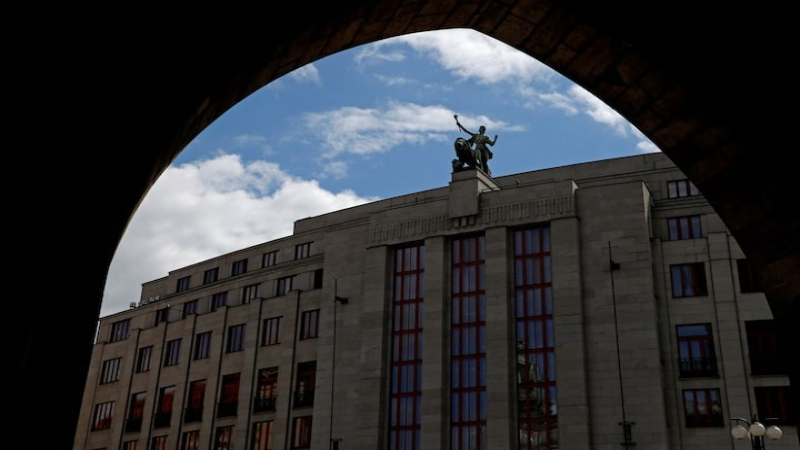
The Czech central bank has moved from theory to action by quietly building a live million dollar crypto portfolio to understand how digital assets behave in real settlement environments, signalling that central banks are no longer watching tokenised markets from the sidelines. The portfolio is held outside official reserves and is designed purely for experimentation, but its composition tells the story: bitcoin dominates the basket, accompanied by dollar backed stablecoins and a tokenised deposit made through a regulated marketplace. What makes this move stand out is the bank’s emphasis on full chain operational testing. Instead of limiting the project to price observation, the institution will evaluate custody flows, multi level approvals, recovery plans, key management practices and compliance controls in environments that mimic real market conditions. Officials said the goal is to gain practical experience before digital assets become commonplace in institutional finance.
The bank plans to run transactions for the duration of the experiment and expects the portfolio to fluctuate as assets are tested under different stress scenarios, a move that mirrors the evolving shift toward programmable markets. Governor Ales Michl said the future of payments and investments will revolve around fast execution where users can move from daily purchases to tokenised financial instruments with a single tap, a direction that aligns with broader trends across Europe and Asia. The Czech central bank wants to understand how a national currency might interact with tokenised bonds or other digitised assets once these systems become mainstream. While the institution is not preparing to integrate bitcoin into reserves, it is leaving the possibility open depending on future regulatory clarity, asset maturity and technological readiness. Officials emphasised that legal frameworks currently support limited digital exposure, reinforcing that this test portfolio is a controlled research environment, not a shift in monetary strategy.
The central bank acknowledged that the wider European system remains cautious. Earlier discussions about adding bitcoin to reserves received resistance from regional policymakers who view the asset as too young for sovereign balance sheets. However, by executing purchases outside the reserve structure, the Czech bank is able to operate within national and EU laws while still studying how digital instruments behave under official oversight. The experiment arrives at a time when tokenisation is speeding up across markets and central banks are exploring new technologies behind the scenes. For institutions preparing for a future where tokenised deposits, digital bonds and real world asset portfolios settle across programmable networks, this test marks a meaningful signal that even conservative financial authorities are preparing for the next phase of digital finance.