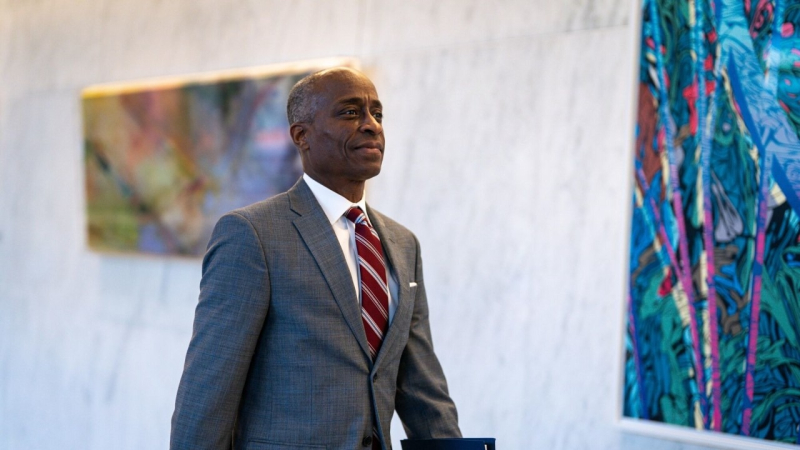
Federal Reserve Vice Chair Philip Jefferson sent a steady signal through global markets on Monday, urging a slower approach to future rate cuts as policymakers navigate a fragile mix of moderating inflation, uneven hiring trends and rising uncertainty surrounding the real impact of artificial intelligence on the labor cycle. His remarks emphasized that the central bank’s latest quarter point cut was appropriate based on cooling price pressures and a softer employment outlook, but he noted that policy is only now drifting toward a zone that neither slows nor accelerates growth. Traders monitoring the statement viewed it as a caution light across currency and bond markets, marking a shift from the rapid rate cut expectations that dominated earlier in the fall. The message reinforced that the Fed is not ready to commit to a deeper easing path while incoming data remain constrained and inflation signals continue to show mixed patterns across core categories. With the next policy meeting approaching and market sentiment pivoting around every piece of labor data, Jefferson’s tone added a layer of watchfulness to an already sensitive macro environment.
The uncertainty is amplified by gaps in government reporting following the extended shutdown that delayed key indicators and left policymakers and traders without a clear baseline for real time analysis. While the upcoming employment report is expected to restore some clarity, the broader release schedule has not been reestablished, affecting everything from wage momentum to productivity readings. Jefferson highlighted that the economy is shifting into a slower rhythm, with businesses hesitant to expand hiring commitments until they understand how AI deployment will change staffing needs. Firms are weighing whether automation can take on tasks that would have previously required new workers, creating a cautious stance in industries that historically accelerated hiring at the first sign of easing financial conditions. This hesitation is feeding into the Fed’s calculations and shaping expectations for the pace of future rate adjustments. Investors tracking the Fed’s communication detected a subtle reinforcing of the message that policy is approaching its neutral landing zone and that the central bank is preparing for a more measured glide path rather than a sharp pivot.
Jefferson’s comments also signaled that the labor market’s cooling tempo is becoming a central variable in the Fed’s strategy as AI driven efficiency tools put pressure on traditional hiring cycles. Companies weighing long term commitments are holding back until they understand how emerging technologies will intersect with broader economic policy shifts. That tension is creating a unique dynamic in which uncertainty around AI’s impact on the workforce blends with gaps in official data to complicate the central bank’s forward view. Market desks noted that this combination is generating a new set of signals ahead of the December meeting, with traders treating every speech from Fed officials as a potential recalibration point for rate expectations. The atmosphere surrounding the next decision is tightening as investors study whether the Fed chooses to extend patience or restarts a more aggressive easing pattern. Jefferson’s guidance leaned firmly toward patience, strengthening the narrative that the central bank aims to slow its pace until both inflation signals and labor conditions stabilize with greater clarity.