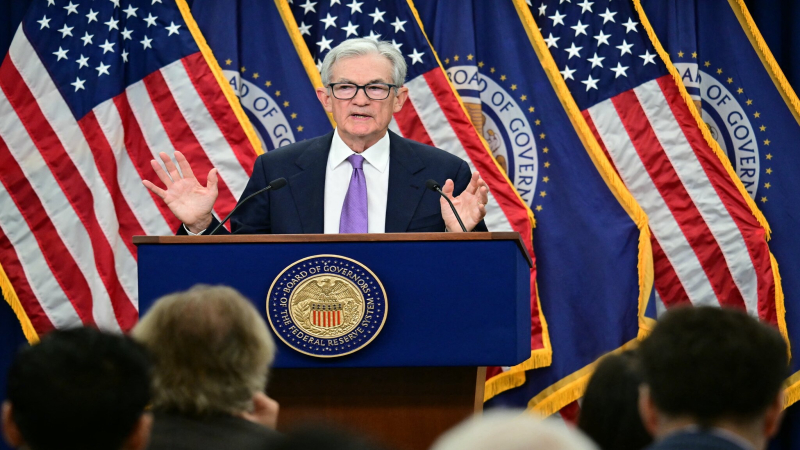
The U.S. Federal Reserve’s latest meeting revealed a rare division among policymakers, highlighting the growing uncertainty inside the central bank as it weighs how to manage slowing growth and persistent inflation pressures. The decision, passed by a ten-to-two vote, shows that not all members agree on the pace or direction of future rate moves, underscoring the challenge of maintaining policy cohesion as the economic outlook becomes more complex.
According to the official summary of deliberations, some participants favored keeping rates unchanged through early next year to avoid overstressing credit markets, while others pushed for an additional quarter-point hike to ensure inflation returns to the two-percent target. The divide reflects contrasting views on the durability of the U.S. labor market, consumer resilience, and the trajectory of core price growth heading into 2026.
Markets responded cautiously following the announcement. Treasury yields moved slightly higher on expectations that the Fed may remain restrictive longer than previously assumed, while equity futures showed mixed reactions. The dollar strengthened modestly against major currencies, supported by investors seeking safety in U.S. assets amid heightened policy uncertainty.
Analysts note that the disagreement could signal a turning point for the Powell-era consensus that has defined the central bank’s communication strategy. The internal split also suggests that policymakers are balancing two competing risks: tightening too aggressively and undermining growth, or easing too soon and reigniting inflation. Several regional Fed presidents have recently warned that premature rate cuts could damage credibility and destabilize inflation expectations.
The latest inflation readings show prices easing but still running above target, with energy and housing costs remaining elevated. At the same time, economic growth has slowed, prompting some members to argue that restrictive policy should be maintained only as long as necessary to prevent a deeper downturn.
The coming months will be crucial as new data on employment and consumer spending guide expectations for the Fed’s December meeting. Investors now expect policymakers to shift toward a more data-dependent approach rather than signaling clear forward guidance, leaving markets sensitive to every new release on inflation or labor conditions.
The internal debate underscores the delicate balance the Federal Reserve must maintain as it navigates a changing economic landscape shaped by high debt levels, global trade uncertainty, and ongoing financial-sector adjustments.