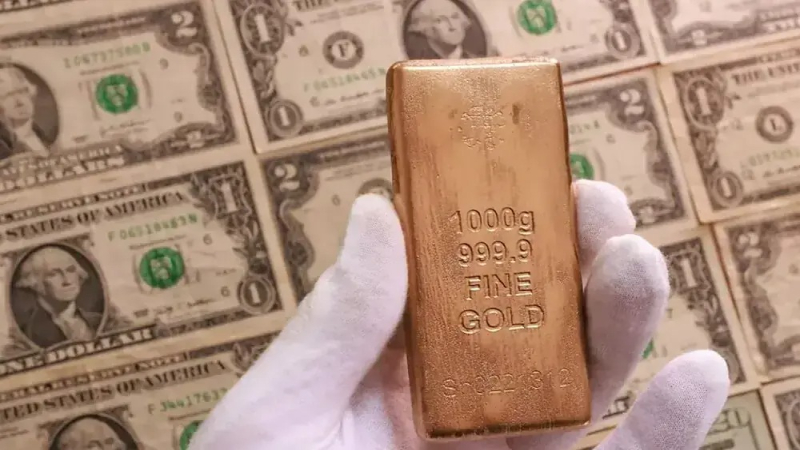
Gold prices moved sharply higher after the United States and Israel launched coordinated strikes on Iran, intensifying geopolitical tensions and triggering a renewed flight to safety across global markets. Investors responded swiftly, shifting capital into traditional safe haven assets amid concerns about energy supply disruptions and broader regional escalation.
Analysts expect bullion to see heightened demand as trading resumes across major exchanges. Early indications from digital gold markets showed tokenized products trading at premiums over spot levels during the weekend, reflecting strong buying interest while traditional markets were closed. PAX Gold traded above 5,340 dollars per ounce, while Tether Gold climbed near 5,290 dollars, signaling a clear risk off sentiment among investors.
Market participants noted that gold could initially spike by as much as 200 dollars per ounce when full liquidity returns, though some cautioned that early surges may moderate as traders reassess the scale and duration of the conflict. Historically, gold tends to rally sharply on the outbreak of hostilities before consolidating once immediate uncertainty is absorbed.
Energy markets remain central to gold’s trajectory. Crude oil prices have surged amid fears that fighting could disrupt flows through key Middle Eastern routes. A sustained rise in oil could fuel inflation concerns, reinforcing demand for gold as a hedge. However, analysts also pointed out that a strengthening U.S. dollar could cap bullion’s upside, especially if higher oil prices support the greenback.
Several strategists believe gold could retest the 5,500 dollar level and potentially challenge record highs near 5,600 dollars if tensions persist. Others expect some short term volatility, with possible pullbacks after the initial reaction. Still, many market observers emphasize that any meaningful dips are likely to attract buyers, particularly if geopolitical risks remain elevated for weeks or months.
Beyond bullion, silver is also expected to experience increased volatility. Investors often rotate into precious metals broadly during periods of geopolitical stress, although gold typically absorbs the majority of safe haven flows.
The broader macro backdrop adds another layer of complexity. If oil prices remain elevated, inflation expectations could shift higher, potentially influencing central bank policy outlooks. That dynamic may further support precious metals, particularly if investors perceive heightened risks to global growth or supply chains.
With equity markets vulnerable to sharp swings and energy prices rising, gold appears poised to maintain its role as the primary defensive asset in portfolios. As markets digest developments in the Middle East, traders will closely monitor both commodity flows and currency movements to gauge whether the latest rally has further room to extend.