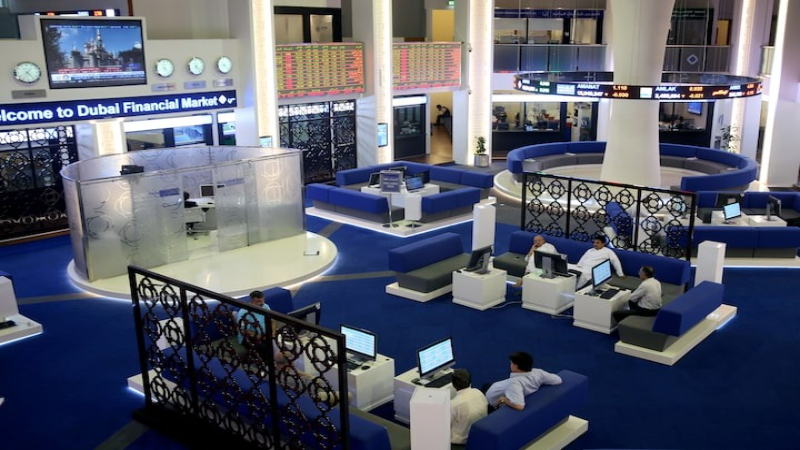
Major stock markets in the Gulf ended mixed on Tuesday as weaker oil prices and shifting expectations over U.S. interest rates weighed on investor sentiment. Benchmark indices in Saudi Arabia and Qatar fell slightly, while Abu Dhabi and Dubai closed higher, reflecting the region’s cautious trading tone.
Oil prices, a key driver for Gulf economies, hovered near recent lows after a modest recovery earlier in the week. Brent crude settled below 65 dollars a barrel, pressured by signs of slower global demand and uncertainty surrounding OPEC+ output plans. The decline affected energy-linked shares across the region, particularly in Saudi Arabia, where the Tadawul All Share Index slipped after several sessions of gains.
Saudi petrochemical and banking stocks saw mild losses as investors priced in the potential impact of lower crude prices on fiscal spending and corporate earnings. In Qatar, the main index edged lower as industrial and transport stocks retreated, offsetting modest gains in financials.
Meanwhile, markets in the United Arab Emirates moved in the opposite direction. Dubai’s index rose, supported by property and logistics shares, while Abu Dhabi recorded slight gains on selective buying in energy and telecom companies. Traders said the resilience in UAE equities reflected stronger domestic activity and investor confidence in diversified revenue streams beyond oil.
Analysts noted that global macroeconomic signals added to the cautious mood. With U.S. Federal Reserve policymakers signaling that rate cuts are unlikely in the near term, risk appetite in emerging markets has softened. The stronger U.S. dollar and higher bond yields have encouraged some investors to rotate out of equities and into safer assets.
Elsewhere in the region, Kuwait and Oman saw limited movement as traders awaited more clarity on oil policy and corporate results. Market participants described the session as consolidative, with investors reassessing positions after recent volatility.
Despite the muted tone, regional analysts remain optimistic that Gulf markets will continue to attract foreign inflows as governments maintain investment in infrastructure and non-oil sectors. The combination of solid fiscal positions and gradual diversification is expected to help offset external pressures from fluctuating energy prices and monetary policy shifts.
For now, sentiment remains tied closely to oil market stability and the path of U.S. interest rates, both of which continue to set the tone for trading across the Gulf region.