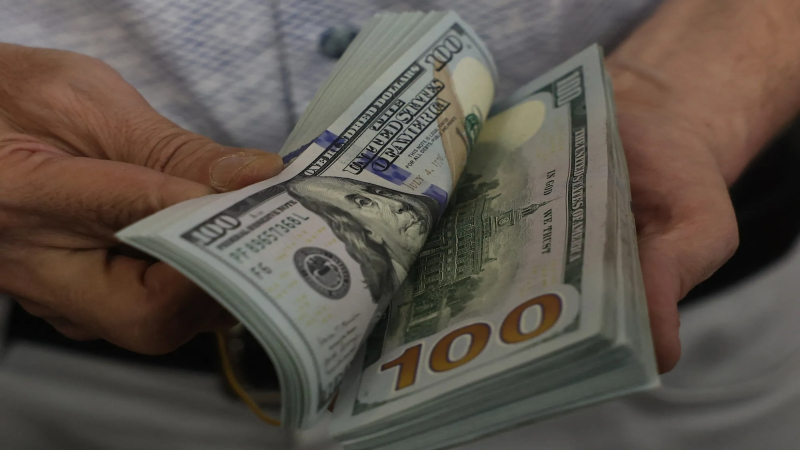
The role of the US dollar in global markets has changed in subtle but important ways. For decades, investors viewed the dollar primarily as a long term macro position tied to growth, interest rates, and trade balances. Today, the dollar is increasingly treated as a tactical instrument used for timing, liquidity management, and risk control rather than a structural investment.
This shift reflects how markets now operate. Capital moves faster, cycles are shorter, and risk is managed more actively. The dollar’s deep liquidity and central role in global finance make it ideal for tactical deployment in a world defined by uncertainty.
Dollar Liquidity Makes It the Preferred Tactical Tool
The most important factor behind this shift is liquidity. The dollar remains the most liquid currency in the world across spot, derivatives, and funding markets. This allows investors to enter and exit positions quickly without disrupting prices.
Tactical strategies depend on flexibility. Investors want to adjust exposure rapidly as conditions change. The dollar provides that optionality. It can be deployed, hedged, or withdrawn with minimal friction.
As a result, the dollar is increasingly used as a parking asset during uncertainty rather than a long term directional trade.
Shorter Market Cycles Favor Tactical Positioning
Market cycles have compressed. Policy shifts, geopolitical developments, and financial stress now unfold faster than in previous decades. Long term currency bets struggle to keep pace with these changes.
Investors respond by treating the dollar tactically. They increase exposure during periods of stress and reduce it when risk appetite improves. This dynamic use aligns better with modern market rhythms.
The dollar’s role shifts from expressing a macro view to managing timing and risk.
Cross Asset Hedging Reinforces Tactical Dollar Use
The dollar is also widely used as a hedge across asset classes. When correlations rise and markets move together, dollar exposure helps stabilize portfolios.
This hedging role encourages tactical use. Investors increase dollar exposure temporarily to offset risk elsewhere, then redeploy capital when conditions normalize.
Because this behavior is frequent and responsive, it reinforces the dollar’s function as a tool rather than a thesis.
Global Uncertainty Keeps Demand Active but Fluid
Persistent global uncertainty supports ongoing demand for the dollar, but not necessarily as a long term commitment. Investors prefer to remain nimble. They use the dollar to manage transitions rather than anchor portfolios indefinitely.
This results in flows that are strong but unstable. Dollar strength appears and fades repeatedly as conditions shift.
Markets interpret these moves as tactical adjustments rather than structural trends.
Digital Markets Accelerate Dollar Rotation
Digital finance and fast settlement systems allow dollar exposure to rotate quickly. Capital can move in and out of dollar denominated instruments with unprecedented speed.
This accelerates the tactical use of the dollar. Investors can respond to signals immediately without long lock in periods.
The dollar becomes a dynamic instrument rather than a static position.
Conclusion
The dollar has evolved from a long term macro bet into a tactical asset used for liquidity, hedging, and timing. Its unmatched liquidity and central role in global finance make it ideal for short horizon strategies. In modern markets, flexibility matters more than conviction. The dollar’s tactical dominance reflects this shift in how risk is managed.