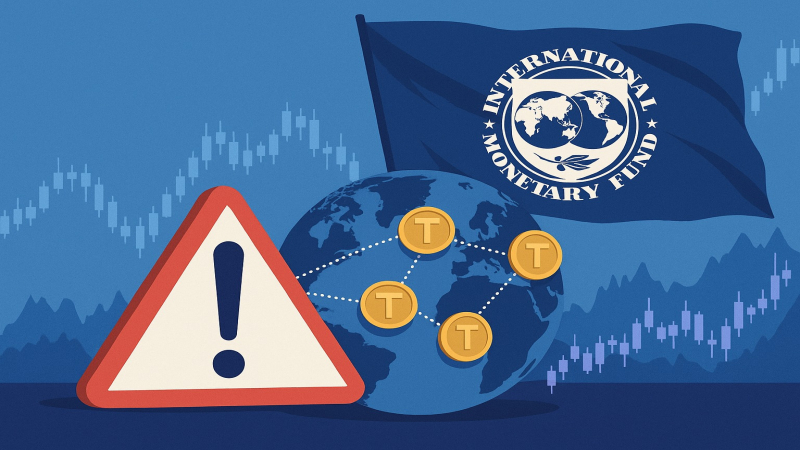
The IMF has reignited global debate after issuing its strongest caution yet on the rise of tokenized markets, warning that instant settlement and automated execution could create a new generation of flash style crashes in digital finance. The institution released a fresh explainer outlining how tokenization is speeding up global markets while also concentrating risk, framing programmable assets as the next leap in the evolution of money. The message struck a nerve across crypto and traditional finance because the IMF rarely steps in this directly unless it believes a structural shift is underway. Researchers highlighted that early tokenized systems show major cost reductions and settlement gains of up to twenty percent, making them attractive for large institutions seeking faster and cheaper market infrastructure. But they warned that speed can cut both ways. Automated smart contracts interacting across multiple platforms could trigger rapid chain reaction failures if markets come under stress, turning isolated events into broader liquidity shocks in seconds. The IMF noted that the 2010 flash crash remains a relevant example of how algorithmic systems can misfire, and tokenized networks raise the stakes by removing the buffers that slowed down traditional rails.
The concern is heightened by one core issue fragmentation. If tokenized assets live on isolated platforms without interoperability, liquidity could thin out and weaken the entire ecosystem. The IMF argues that without open systems, settlement benefits may be lost and markets may become more vulnerable, not less. Its reminder that governments have always intervened during monetary transitions has sparked speculation that regulators may step more deeply into tokenization than the crypto industry expected. Past restructurings like Bretton Woods were used as reference points to signal that authorities rarely allow new financial architectures to evolve without guardrails. This warning comes at a moment when regulatory momentum is building across multiple regions. Institutions in the EU, Singapore, the United Kingdom and the United States are defining how tokenized assets fit into securities and market frameworks. Their goal is not to halt innovation but to push tokenized markets into structures that match the safeguards used in traditional finance.
Governments are already experimenting with tokenized versions of their own instruments. Singapore has run pilots on tokenized government bills and wholesale CBDC transactions, while Europe is testing forms of state backed tokenized debt and distributed ledger settlement for fixed income assets. Global exchanges have urged tighter oversight as well, arguing that some tokenized equity products mimic traditional stocks without offering investor rights or protections. With Europe now hosting more than half of global tokenized fixed income issuance, policymakers expect rapid growth but remain cautious about the operational risks. Meanwhile, private sector confidence continues to rise, with market leaders predicting that most financial assets could be tokenized within the next five years. The IMF’s latest warning may slow some experimentation but will likely encourage more coordinated development as the worlds of tokenized and traditional finance continue to merge. The question is no longer whether tokenization will scale but how quickly regulators will move to shape its direction.