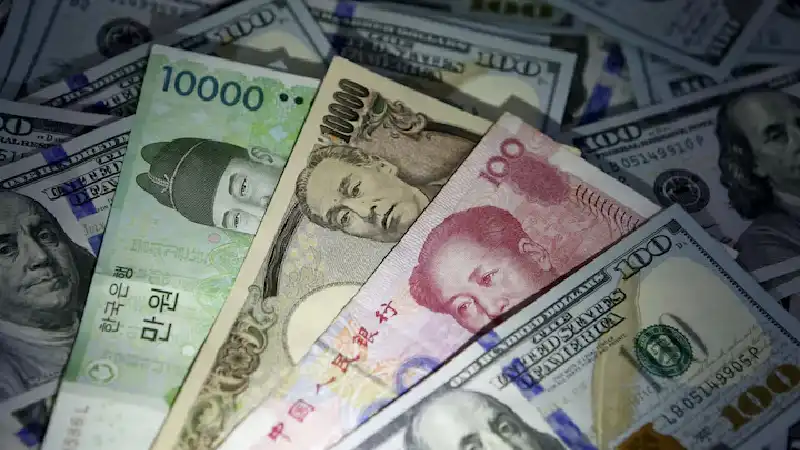
Japan and South Korea have signaled their readiness to respond to rising volatility in foreign exchange markets after sharp declines in their currencies raised concerns among policymakers. Finance ministers from both countries warned that excessive fluctuations in currency markets could threaten economic stability and affect households already facing higher energy costs. The discussions took place during an annual bilateral meeting in Tokyo where officials acknowledged that recent movements in the Japanese yen and South Korean won reflect growing global uncertainty. Both governments indicated they are closely monitoring market developments and are prepared to take appropriate measures if currency movements become disorderly.
The pressure on the yen and the won has intensified as geopolitical tensions and higher energy prices drive investors toward the United States dollar. In times of global uncertainty, the dollar is often viewed as a safe haven asset, attracting capital flows and pushing other currencies lower. The Japanese yen recently reached its weakest level in about twenty months while the South Korean won crossed the psychologically significant threshold of 1500 per dollar for the first time in more than a decade. Analysts say the rapid depreciation has been amplified by rising oil prices, which tend to place additional strain on economies that rely heavily on imported energy.
Government officials from both countries emphasized that currency stability remains a priority as volatile exchange rates can affect trade balances, inflation and consumer purchasing power. Japanese finance officials noted that sharp currency movements can directly impact household budgets because Japan imports a large portion of its energy and food supplies. A weaker yen raises the cost of these imports, which can contribute to rising prices domestically. South Korea faces similar challenges due to its reliance on imported raw materials and energy, meaning prolonged currency weakness could increase production costs for industries and place additional pressure on consumer inflation.
During the meeting, the finance ministers reaffirmed their commitment to cooperate closely on monitoring foreign exchange markets and maintaining financial stability. Officials stated that both governments remain prepared to take action if volatility becomes excessive or threatens orderly market conditions. Japanese authorities have historically intervened in currency markets during periods of sharp depreciation, although policymakers recognize that sustained dollar demand driven by global geopolitical tensions can make intervention more difficult. Despite this challenge, officials stressed that policy tools remain available if market conditions begin to undermine economic stability.
The recent currency movements come at a time when global financial markets are already dealing with uncertainty linked to energy supply disruptions and shifting capital flows. Rising oil prices have added pressure to import dependent economies across Asia while increasing costs for transportation and manufacturing sectors. Financial analysts say these conditions have encouraged investors to hold more dollars and short term safe assets. This shift has contributed to broader currency weakness across several Asian economies as investors reassess risk exposure in an environment shaped by geopolitical tensions and fluctuating commodity prices.