Global financial markets turned sharply volatile after US President Donald Trump declared that there would be no agreement with Iran unless the country accepted unconditional surrender, a statement that intensified geopolitical concerns and sent energy prices higher. The comments triggered a strong reaction across risk assets as oil prices surged while equities and cryptocurrencies moved lower. Investors rapidly shifted toward safer positions amid fears that escalating tensions in the Middle East could disrupt global energy supply and further complicate the outlook for the world economy and central bank policy.
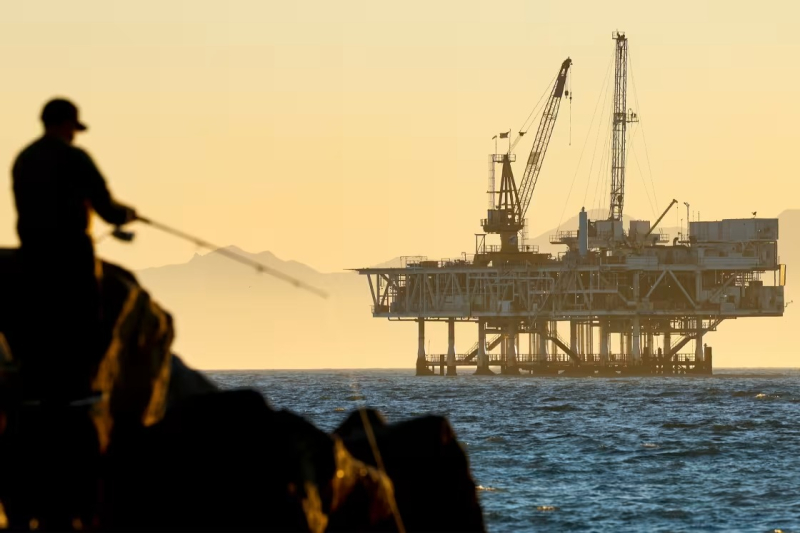
Crude oil markets reacted immediately to the escalating rhetoric. West Texas Intermediate crude jumped sharply during trading and approached ninety dollars per barrel, marking one of the strongest price moves seen in recent years. Rising energy prices tend to ripple across global markets because oil remains a critical input for transportation, manufacturing and supply chains. As oil surged, US stock index futures extended their losses, with technology heavy Nasdaq futures declining by nearly two percent. Cryptocurrency markets also felt the pressure as bitcoin dropped roughly five percent during the session, falling to around sixty eight thousand eight hundred dollars.
At the same time new economic data signaled that the US labor market may be weakening. The latest employment report showed payrolls unexpectedly declined by ninety two thousand jobs in February, highlighting a slowdown in hiring across the economy. The unemployment rate also edged higher to about four point four percent compared with four point three percent in the previous month. Economists say the figures reinforce a trend that has been building for months as companies respond cautiously to economic uncertainty, higher borrowing costs and geopolitical risks that have affected business investment and expansion plans.
The labor market slowdown is creating a complicated situation for the Federal Reserve. Under normal circumstances declining employment would strengthen the case for interest rate cuts aimed at supporting economic growth. However inflation remains above the central bank’s two percent target and rising energy prices threaten to push consumer prices even higher. Oil price increases often feed directly into transportation costs and broader inflation indicators, which means policymakers must balance the risk of a slowing economy against the danger of inflation remaining elevated for longer than expected.
Financial markets are now trying to interpret what this combination of geopolitical tension and weakening economic data could mean for monetary policy in the coming months. Interest rate traders currently see little chance of an immediate rate cut, with market expectations suggesting only a small probability of policy easing during the next Federal Reserve meetings. Investors are also closely watching developments in the Middle East because any escalation that affects energy supply routes could further increase oil prices and amplify inflation pressures globally.
Analysts note that geopolitical developments often have immediate spillover effects across asset classes. Energy prices tend to rise when markets fear supply disruptions, while risk assets such as equities and cryptocurrencies can fall as investors reduce exposure to volatility. Bitcoin and other digital assets have increasingly traded alongside technology stocks during periods of macroeconomic uncertainty, meaning global political developments can influence crypto markets just as strongly as traditional financial assets.
As traders continue to monitor diplomatic developments and economic indicators, the combination of rising oil prices, declining employment growth and persistent inflation is adding new uncertainty to the outlook for financial markets. The situation leaves investors focused on two key questions in the weeks ahead. Whether geopolitical tensions will intensify further and whether the Federal Reserve will be forced to maintain tight monetary policy despite signs that the US economy may be losing momentum.