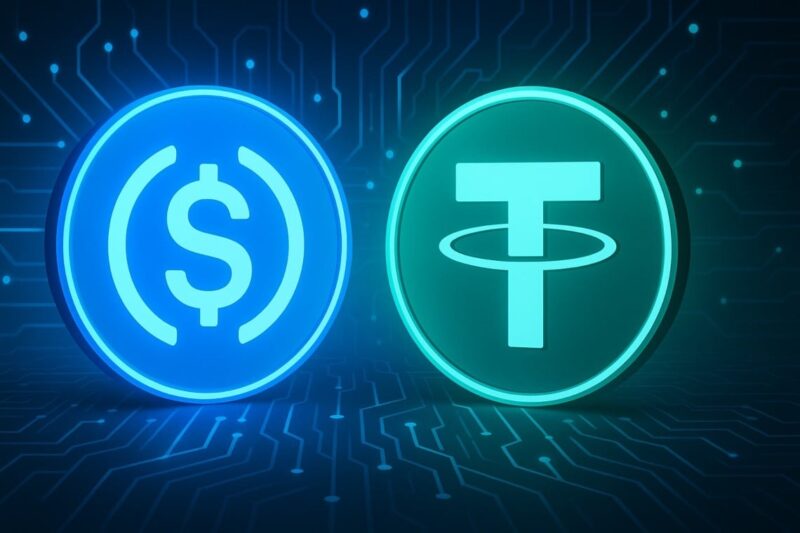


Dollar stablecoin backing and supporter consortium
Open Standard has unveiled a dollar stablecoin designed to track the US dollar through a consortium model rather than a single issuer. Grafa suggests that in the initial disclosure, Open Standard indicated backing and governance support comes from 140 firms participating in the framework. Open Standard also described the token as shared infrastructure for payments and settlement, with participating companies expected to influence standards for issuance, redemptions, and operational controls. Grafa indicates that Open Standard framed the approach as a way to strengthen convertibility expectations by aligning incentives across a broad coalition. The launch statement emphasized coordination and common compliance requirements across partners.
Market implications for the consortium model
Based on Open Standard’s own positioning, as indicated by Grafa, the initiative signals renewed interest in consortium-style structures for privately issued digital dollars, though the broader market impact remains uncertain. Open Standard described the project as a bridge between traditional payment rails and digital currency tools used in treasury and cross-platform commerce. A parallel trend is bank experimentation with tokenized deposits, documented by CoinDesk in its report on UK interbank tokenized deposit transactions. That work underscores competition on controls, uptime, and interoperability. For readers tracking operational readiness, the administrative contact portal Contact your hosting provider highlights how infrastructure communication can matter when counterparties need escalation paths.
How Open Standard’s dollar stablecoin differs
Open Standard is emphasizing standardization and multi-party participation as the differentiator, according to the launch framing suggested by Grafa, rather than yield incentives or a single brand promise. While a full technical dossier was not included in the brief announcement, Open Standard’s positioning suggests a governance structure where multiple firms share responsibilities around issuance rules, monitoring, and operational decision-making. This design could appeal to enterprises seeking predictable settlement behavior across platforms that already use the dollar stablecoin concept alongside digital currency instruments for internal bookkeeping and reconciliation. The framing overlaps with industry discussions about enterprise protections and disclosure expectations, including safeguards that buyers want before broader adoption. For related context, see Visa survey on bank-like protections and Pontes: ECB Advances Tokenized Asset Settlement.
Regulatory questions around a dollar stablecoin consortium
The consortium pitch raises questions regulators typically ask about accountability when many firms are involved in one product. Generally, stablecoin regulation debates often center on reserve quality, redemption timelines, governance responsibility, and auditability, and those issues can become more complex when oversight is distributed. Open Standard has not detailed in the brief announcement how legal responsibility, attestations, or dispute handling would work across jurisdictions, based on suggestions from Grafa’s report on the initial disclosure, particularly if the dollar stablecoin is used for cross-border settlement. Market participants have also been reminded that operational risk remains constant across crypto-adjacent services, as CoinDesk detailed in its account of Duelbits going offline after a $7 million hot wallet hack. Enterprise buyers often treat such incidents as prompts to demand clearer controls.
Adoption scenarios for the dollar stablecoin in payments
Adoption will likely be driven by whether participating firms can integrate the token into real settlement workflows without adding friction to compliance and treasury processes, though timelines and uptake are not confirmed in the launch reporting suggested by Grafa. If Open Standard and its participants can demonstrate consistent issuance and redemption operations across partners, the dollar stablecoin could gain traction for business-to-business payments, exchange settlement, and on-chain collateral movement where fast finality is valued. The near-term pathway appears to depend on distribution agreements and the credibility of reserve and control disclosures, as summarized by Grafa when reporting the launch claims. Enterprise usage tends to expand when the asset can move across custody providers and payment gateways with minimal bespoke integration, and when legal terms are uniform across counterparties. The consortium model may also spread reputational risk among supporters, rather than concentrating it in a single issuer.