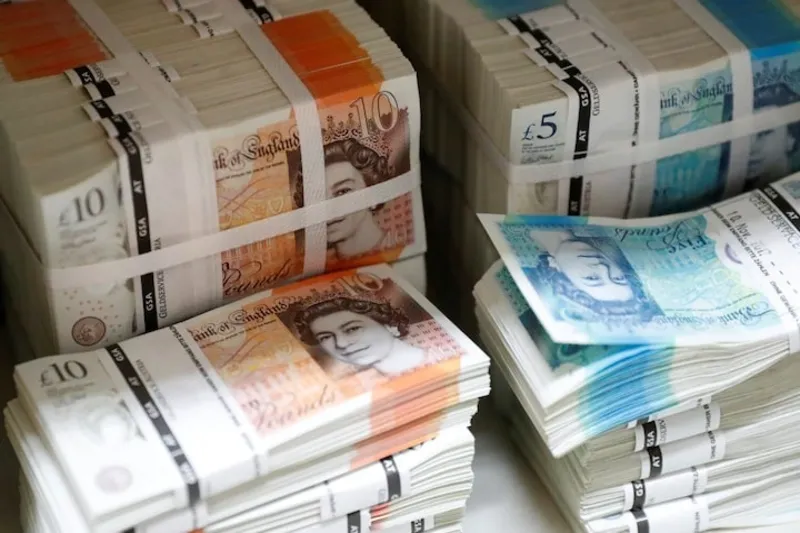
The British pound weakened against both the United States dollar and the euro after disappointing economic data raised fresh concerns about the strength of the United Kingdom’s economy. Currency markets reacted quickly after new figures showed that the British economy unexpectedly stalled at the start of the year, increasing uncertainty about future growth. At the same time geopolitical tensions linked to the conflict in the Middle East strengthened demand for the dollar as investors moved toward assets traditionally viewed as safer during periods of global uncertainty. The combination of weaker domestic data and rising global risk aversion pushed the pound lower in international currency trading.
The pound declined for a fourth consecutive session against the dollar, falling roughly half a percent during the trading day to around 1.3273 dollars. Meanwhile the euro also gained ground against the British currency as investors reassessed economic conditions in the United Kingdom compared with the eurozone. The single European currency traded at about 86.37 pence, recovering from levels that had recently been near a one month low. Analysts said the currency movement reflected growing doubts about the pace of economic activity in Britain and expectations that interest rate decisions could remain uncertain in the months ahead.
Economic data released earlier in the day showed that the British economy recorded no growth in January, surprising economists who had expected modest expansion. At the same time surveys measuring long term inflation expectations suggested that price pressures may remain persistent despite slower economic activity. The combination of stagnant growth and elevated inflation expectations complicates the policy outlook for the Bank of England, which has been balancing the need to support economic growth while also keeping inflation under control.
Economists say the latest figures will likely influence discussions within the Bank of England’s Monetary Policy Committee as officials prepare for upcoming interest rate decisions. Some analysts believe policymakers may choose to keep rates unchanged in the near term rather than move toward cuts as previously expected. Persistent inflation risks, particularly those linked to rising global energy costs, could encourage the central bank to maintain a cautious stance. At the same time weaker consumer demand and a cooling labor market could eventually reopen the debate about reducing borrowing costs later in the year.
Bond markets also reflected shifting expectations about the direction of British monetary policy. Yields on two year UK government bonds edged higher, indicating that investors are adjusting their outlook for interest rates. Market pricing suggests that some traders now expect tighter policy conditions to remain in place for longer than previously anticipated. However several analysts believe that once energy prices stabilize and inflation pressures ease, the Bank of England could resume interest rate cuts in the coming quarters.
Currency strategists say geopolitical tensions are also influencing the movement of global currencies. Concerns about instability in energy markets have encouraged investors to hold more dollar denominated assets, strengthening the US currency against many global counterparts. The pound has been particularly sensitive to these developments because higher energy prices could place additional pressure on Britain’s economy, which remains vulnerable to external supply shocks and global trade disruptions.
Investors are now closely watching upcoming economic indicators and central bank communications for further clues about the direction of monetary policy in both the United Kingdom and the eurozone. The performance of the pound in the coming weeks will likely depend on whether economic growth stabilizes and how policymakers respond to the combined pressures of inflation, geopolitical tensions and shifting global financial conditions.