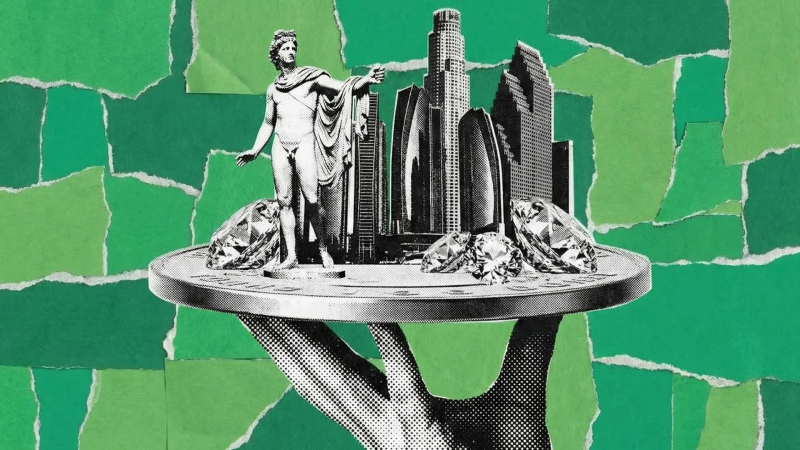
For years, tokenizing real world assets was dismissed as one of crypto’s more ambitious but unrealistic promises. Turning property deeds, gold holdings or treasury bills into blockchain based tokens sounded elegant in theory but struggled in practice. Early experiments were often long on marketing and short on liquidity, transparency and institutional safeguards.
Real world assets, commonly referred to as RWA, aim to convert traditional financial instruments or physical assets into digital tokens that can be traded on blockchain networks. The idea is simple. If cryptocurrencies can move value globally in seconds, why should bonds, money market funds or real estate remain locked in slow settlement cycles and geographic barriers.
The first wave of RWA projects between 2018 and 2022 failed to convince mainstream investors. Several platforms promised fractional ownership of fine art or high yield strategies tied to foreign exchange markets. Many collapsed under weak governance, limited secondary markets or opaque risk management. The concept itself was not flawed, but the infrastructure and regulatory clarity were not ready.
That narrative shifted dramatically as major financial institutions began entering the space. In 2024 and 2025, some of the world’s largest asset managers launched tokenized funds on public blockchains. Their approach focused less on hype and more on operational efficiency. Instead of speculative art tokens, they offered tokenized U.S. Treasury products and money market funds backed by regulated custodians.
BlackRock introduced a tokenized fund designed to operate on blockchain rails, signaling that asset tokenization was no longer a fringe experiment. Franklin Templeton placed a U.S. Government Money Market Fund on a public blockchain, enabling investors to hold and transfer shares digitally. J.P. Morgan expanded its digital asset platform to process tokenized collateral in repo markets, reducing settlement friction.
The appeal is increasingly practical rather than ideological. Traditional markets still rely on settlement systems that can take two days to finalize trades. Tokenization allows near instant settlement, programmable compliance and the potential for 24 hour trading. Investors can move tokenized assets across platforms more efficiently than legacy brokerage systems allow.
Analysts project that tokenized assets could grow into a multi trillion dollar market by the end of the decade, driven by demand for efficiency, transparency and cross border accessibility. Stablecoins have also played a supporting role by providing a reliable digital settlement layer that integrates with tokenized securities.
However, risks remain. Tokenized assets still depend on off chain legal frameworks. If the underlying asset is mismanaged or seized, blockchain records alone cannot protect investors. Regulatory oversight and robust custody arrangements are essential to prevent a repeat of earlier failures.
What has changed is not just the technology but the caliber of participants. When global asset managers and major banks commit resources to tokenization, the conversation moves from experimentation to infrastructure. Real world assets on blockchain are no longer a speculative side project. They are becoming part of the financial system’s evolving backbone.