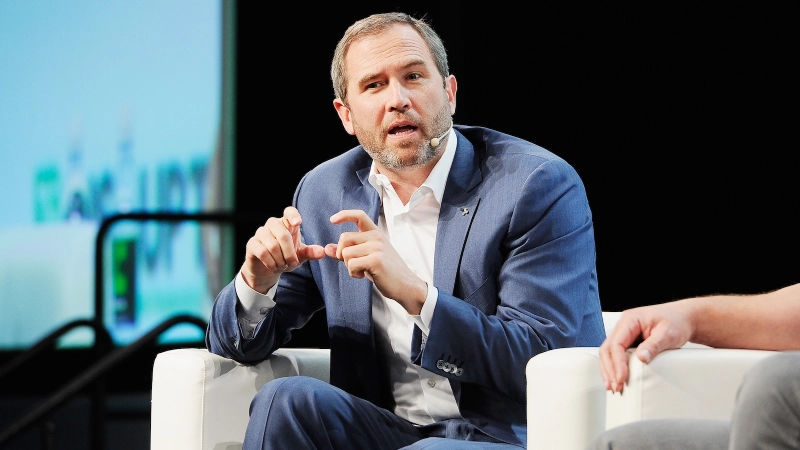
Ripple is on track to deliver its strongest quarterly performance to date, according to chief executive Brad Garlinghouse, who highlighted rapid growth driven by strategic acquisitions and expanding institutional interest in digital assets. Speaking in a recent interview, Garlinghouse pointed to a surge in activity following a series of major deals completed over the past year. The company has aggressively positioned itself within the evolving blockchain ecosystem, signaling confidence in long term adoption trends across both traditional finance and crypto markets.
The firm deployed approximately 4 billion dollars into the digital asset sector through investments, mergers, and acquisitions, including high profile purchases such as Hidden Road and GTreasury. These moves are aimed at strengthening Ripple’s infrastructure and expanding its reach into institutional finance. The scale of investment reflects a broader push by the company to integrate blockchain solutions into mainstream financial operations, particularly as demand grows for more efficient payment and treasury management systems.
Garlinghouse also addressed the evolving regulatory landscape in the United States, noting that expectations for the passage of the CLARITY Act have shifted. Initially anticipated to be finalized earlier in the year, the timeline is now expected to extend further as lawmakers continue to debate key provisions. The proposed legislation is intended to establish a comprehensive framework for digital assets, but ongoing disagreements among policymakers and industry stakeholders have slowed progress.
The discussion around regulation has intensified as major industry participants weigh in on specific aspects of the bill. Coinbase has publicly opposed elements of the latest proposal, particularly concerning rules around stablecoin yield. Garlinghouse emphasized the importance of ensuring that regulatory policies support innovation rather than becoming tools of political influence, warning that unclear or restrictive frameworks could hinder the United States’ competitiveness in the global digital asset market.
A central theme in Ripple’s outlook is the growing role of stablecoins as a key driver of adoption. Garlinghouse described stablecoins as the most significant business opportunity within the crypto sector, noting that large corporations are increasingly exploring their use in treasury operations. Executives at major companies are reportedly directing finance teams to evaluate how stablecoins can improve efficiency in payments, liquidity management, and cross border transactions.
Market data supports this trend, with stablecoin transaction volumes reaching over 33 trillion dollars in 2025, dominated largely by leading assets such as USDT and USDC. Projections suggest that this figure could expand significantly in the coming years, potentially reaching tens of trillions more as adoption accelerates. The rapid growth highlights how stablecoins are transitioning from a niche crypto tool to a core component of global financial infrastructure.
Ripple has also entered the space directly with the launch of its own stablecoin RLUSD, introduced in late 2024. The asset has already climbed into the top tier of stablecoins by market capitalization, reflecting early traction and strategic positioning. As competition intensifies among issuers, Ripple’s focus on enterprise use cases and institutional partnerships may play a critical role in shaping its trajectory within the expanding stablecoin ecosystem.
As the company continues to scale its operations and navigate regulatory developments, its performance is increasingly tied to broader industry trends. The combination of institutional adoption, regulatory clarity, and technological innovation is expected to define the next phase of growth for digital assets, with stablecoins positioned at the center of this transformation.