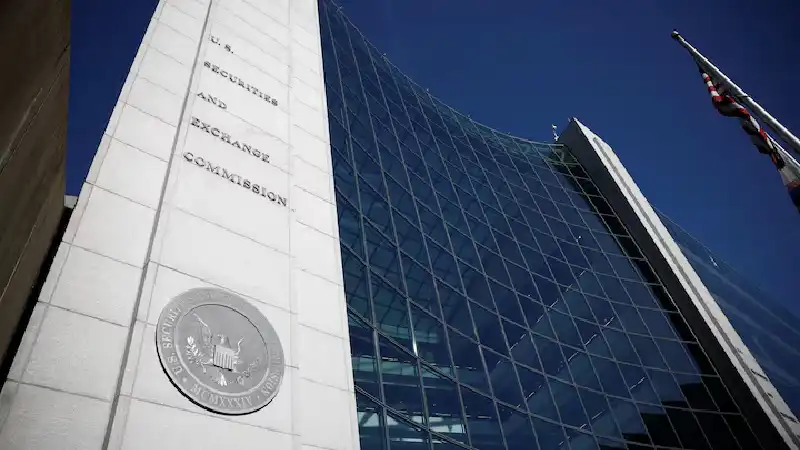
A senior official at the United States Securities and Exchange Commission has encouraged financial firms to engage directly with regulators as the industry explores asset tokenization and new blockchain based financial products. SEC Commissioner Hester Peirce said companies developing innovative investment tools should communicate with regulators early in the process to ensure compliance with securities laws while testing the potential of emerging technologies. Her comments come as asset managers and financial institutions increasingly examine how blockchain infrastructure can be integrated into traditional financial markets through tokenized securities and digital investment products.
Peirce explained that the regulatory agency is observing growing interest from financial firms seeking to combine digital assets with established investment vehicles such as exchange traded funds and other structured financial products. Asset tokenization refers to the process of representing real world assets including securities or funds on blockchain networks where they can be traded digitally. Industry participants believe this approach could improve efficiency, reduce settlement times and expand investor access to certain asset classes. As demand for these products grows, regulators are assessing how existing legal frameworks apply to blockchain based financial instruments.
According to Peirce, the SEC’s role is not to determine whether a specific investment product is desirable but to ensure that issuers comply with regulatory requirements and provide transparent information to investors. The agency focuses on enforcing disclosure standards and verifying that financial products meet the legal criteria established under U.S. securities law. This regulatory approach is particularly relevant as companies experiment with new financial structures involving digital assets, tokenized funds and blockchain based trading platforms. Clear communication between developers and regulators could help reduce uncertainty while allowing innovation to develop within established legal boundaries.
The commissioner also addressed ongoing discussions surrounding exchange traded funds that use higher leverage to amplify potential returns. Some firms are exploring ETF structures that exceed traditional leverage limits, prompting additional attention from regulators. Existing rules already set parameters for leverage levels in many financial products, but Peirce noted that issuers can propose alternative structures if they demonstrate that their design complies with the broader securities law framework. As financial engineering becomes more complex, regulatory oversight will likely focus on ensuring that risk disclosures remain accurate and understandable for investors.
Interest in tokenized financial products has increased significantly as asset managers explore ways to modernize market infrastructure using blockchain technology. Many institutions are studying how digital ledgers could support faster settlement, fractional ownership of assets and global distribution of financial products. Some companies are also experimenting with tokenized versions of traditional securities that could be traded on blockchain platforms while still adhering to regulatory standards. These developments have prompted ongoing discussions between financial regulators, technology firms and investment managers about how digital finance may reshape capital markets.
The SEC’s openness to dialogue comes at a time when global regulators are examining how blockchain based finance can coexist with existing regulatory systems. Market participants expect that collaboration between regulators and the financial industry will play a central role in determining how tokenized securities and digital investment vehicles evolve in the coming years. As financial innovation accelerates, discussions around compliance, investor protection and market transparency are likely to shape the regulatory environment for asset tokenization and blockchain driven financial products across international markets.