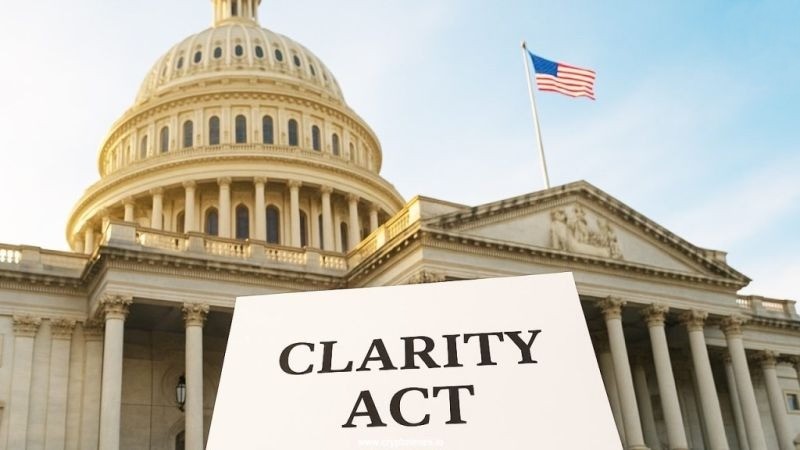
The U.S. crypto industry is facing mounting pressure in Washington as negotiations over stablecoin rewards threaten to derail broader digital asset legislation. At the center of the debate is the Digital Asset Market Clarity Act, widely viewed as the sector’s most important policy objective in Congress this year.
Senate timing constraints have intensified the urgency. With midterm elections approaching, lawmakers are expected to spend limited time in session after July. Each passing week reduces the likelihood of passing comprehensive crypto legislation in 2026, increasing the stakes for both digital asset firms and traditional financial institutions.
The sticking point is whether platforms should be allowed to offer rewards tied to stablecoin holdings. Crypto companies such as Coinbase have argued that incentive programs encourage adoption and strengthen blockchain based payment networks. Banking lobbyists counter that offering yield on stablecoin accounts closely resembles interest paid on bank deposits. They warn that widespread migration from savings accounts to stablecoins could weaken deposit bases and, by extension, constrain lending across the traditional financial system.
This argument has resonated with lawmakers from both parties, slowing progress on the Clarity Act. While the crypto industry believed it had leverage following passage of the Guiding and Establishing National Innovation for U.S. Stablecoins Act, known as the GENIUS Act, recent regulatory developments have complicated that assumption.
The Office of the Comptroller of the Currency introduced a proposed rule suggesting that certain third party reward arrangements may not align with the intent of existing law. That interpretation has created uncertainty over whether stablecoin incentive programs can continue in their current form.
White House advisers have reportedly signaled openness to a compromise that would permit limited rewards linked to transaction activity rather than passive holding. However, the Senate remains the decisive arena, and banking representatives have maintained a firm stance against most categories of stablecoin yield.
For the crypto industry, the risk is significant. Without the Clarity Act, regulatory oversight would continue to rely heavily on agency rulemaking from the Securities and Exchange Commission and the Commodity Futures Trading Commission. Such rules could be revised under future administrations, leaving the sector without durable legislative foundations.
Democratic lawmakers have also introduced additional conditions for supporting the bill. These include stronger safeguards against illicit finance within decentralized finance protocols, limits on crypto related business ties of senior government officials and the filling of vacant regulatory commission seats. None of these demands have yet been fully resolved.
Industry leaders remain publicly optimistic, emphasizing the importance of establishing a clear legal framework for digital asset markets in the United States. However, with Senate floor time shrinking and political tensions rising, both crypto firms and banking institutions may soon need to decide whether compromise on stablecoin rewards is necessary to secure broader regulatory clarity.