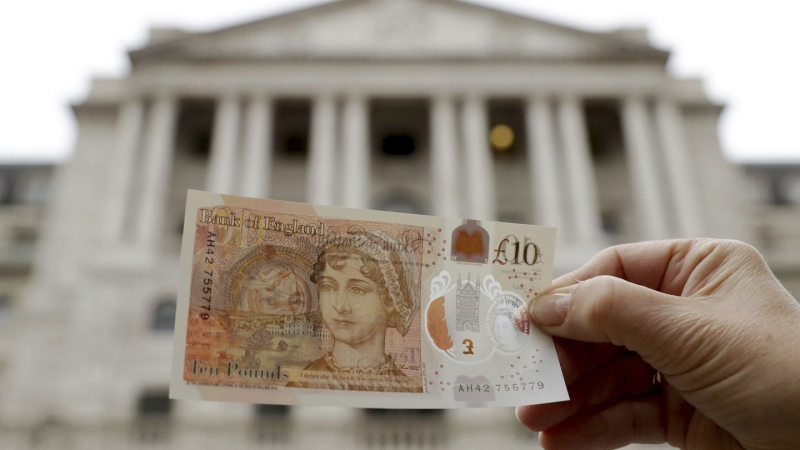
The British pound weakened against both the euro and the U.S. dollar on February 9 as markets reacted to mounting political uncertainty surrounding Prime Minister Keir Starmer and growing expectations that the Bank of England will deliver further interest rate cuts this year. The combination of domestic political strain and shifting monetary policy outlooks has put renewed pressure on UK assets.
Sterling fell sharply against the euro, which rose nearly half a percent to around 87.2 pence, marking its strongest level against the pound in roughly two weeks. While the euro remains broadly flat versus sterling on a year to date basis, the move highlighted how sensitive the UK currency has become to political headlines. Against the dollar, the pound edged lower to around $1.36 after dipping earlier in the session, extending recent softness.
Political developments have moved to the forefront of market attention following the resignation of Morgan McSweeney, Starmer’s chief of staff. McSweeney stepped down after taking responsibility for advising the prime minister on the controversial appointment of Peter Mandelson as the UK ambassador to the United States. The decision reignited scrutiny over Mandelson’s past associations and has intensified pressure on Starmer’s leadership.
Investors remain uneasy as the situation continues to unfold. With the prospect of private communications between officials being made public and key electoral tests approaching, including a parliamentary by election in Manchester later this month and local elections in May, markets are bracing for prolonged political noise. Currency traders traditionally view instability as a negative for sterling, particularly when leadership credibility is called into question.
The unease has not been confined to foreign exchange markets. UK government bonds, known as gilts, slightly underperformed their European counterparts, reflecting investor caution. Some bond investors worry that a Labour led government could pursue more expansionary fiscal policies, potentially increasing public spending and borrowing at a time when debt sustainability remains a concern.
Monetary policy expectations have added another layer of pressure. The pound was already vulnerable after last week’s closely divided decision by the Bank of England to keep interest rates unchanged. The narrow vote prompted traders to increase bets on additional rate cuts later this year, particularly as economic growth remains sluggish and inflation shows signs of easing.
In contrast, the European Central Bank is widely expected to keep interest rates steady for longer. This divergence in policy outlooks has reduced the relative appeal of sterling versus the euro, as investors anticipate higher or more stable returns in the euro zone. Analysts say this dynamic is likely to persist unless UK data surprise to the upside or political risks fade.
Options markets are also signaling rising concern. Measures of three month euro sterling risk reversals have climbed to their highest level since late November, indicating stronger demand for protection against further pound weakness. Such positioning reflects a growing consensus that downside risks for sterling outweigh near term upside potential.
Some strategists warn that pressure could remain on both sterling and gilts as long as uncertainty persists at the top of government and questions linger over the direction of economic policy. The pound’s sensitivity to both politics and interest rate expectations underscores its vulnerable position in a global environment already shaped by shifting growth prospects and geopolitical tension.
For now, markets appear cautious rather than panicked. But with leadership challenges, elections on the horizon, and a dovish tilt from the central bank, sterling is likely to remain under strain in the near term as investors reassess the UK’s political and monetary landscape.