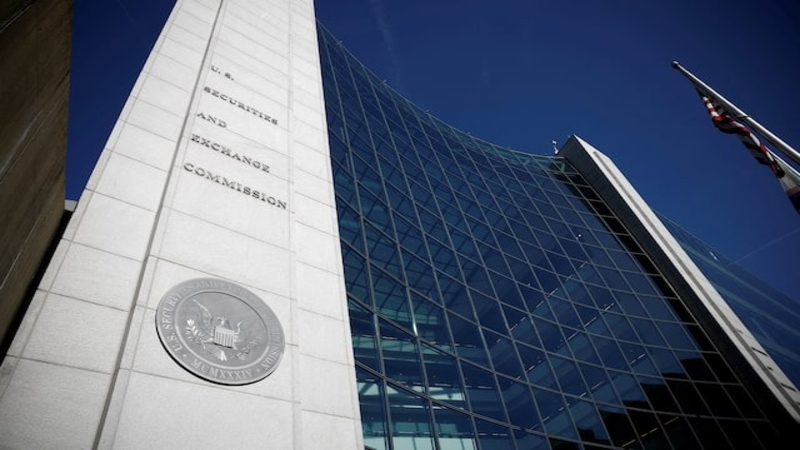
A growing clash between traditional markets and the crypto sector intensified today after major global stock exchanges urged U.S. regulators not to grant special exemptions that would allow unlicensed crypto companies to sell tokenized versions of publicly traded stocks. The warning came in a formal letter to the Securities and Exchange Commission, which is exploring an “innovation exemption” that would permit crypto platforms to issue stock-pegged tokens to retail investors without registering as broker dealers. The proposal has surfaced as several firms prepare to launch equity-linked tokens that mirror the price of listed shares, offering exposure through blockchain rails rather than through traditional brokerage accounts. While the idea signals a new phase of tokenization pushing deeper into regulated markets, exchanges argue it risks weakening investor protections that have shaped U.S. market integrity for decades. Their stance reflects rising tension as the crypto industry steps closer to core equity functions, accelerating a collision between legacy infrastructure and blockchain-based trading models at a moment when regulatory consistency is under intense scrutiny.
The World Federation of Exchanges, whose members include Nasdaq and Deutsche Boerse, said that granting exemptions would create an uneven playing field and open the door for companies to bypass rules every other market participant must follow. The group emphasized that it supports innovation and views tokenization as a natural evolution within capital markets, but stressed that experimentation cannot come at the expense of oversight or fairness. The letter also pointed out that no jurisdiction has approved large-scale tokenized equity trading because the benefits have not yet outweighed the cost of reengineering systems that are already highly efficient. As the SEC under the current administration adopts a more permissive stance toward digital assets, the possibility of stock-pegged tokens entering retail circulation has become more realistic, prompting exchanges to defend long-standing regulatory principles. Their message reinforces that tokenization may transform asset structures but should not dismantle the foundation of investor protection that underpins public markets.
Broader Wall Street interest in digital assets adds complexity to the debate, as banks and investment firms evaluate ways to integrate blockchain products into established business lines without undermining regulatory parity. Supporters of tokenized stocks argue that blockchain settlement could make equity trading more efficient, faster and more flexible for global investors, especially with fractional access, programmable compliance and near-instant clearing. Yet stock exchanges counter that the burden of proof remains on crypto platforms to demonstrate that tokenization produces measurable and scalable improvements in market quality. They also noted that most tokenized stock proposals rely on pegging mechanisms that introduce their own layers of risk, and that shifting retail exposure into structures outside traditional oversight could reduce transparency. With the SEC preparing its next steps and industry pressure building on both sides, today’s developments signal how the future of equity tokenization will be shaped not only by innovation but by regulators balancing modernization with market stability. The decision ahead could define how deeply tokenization penetrates mainstream financial architecture in the coming years.