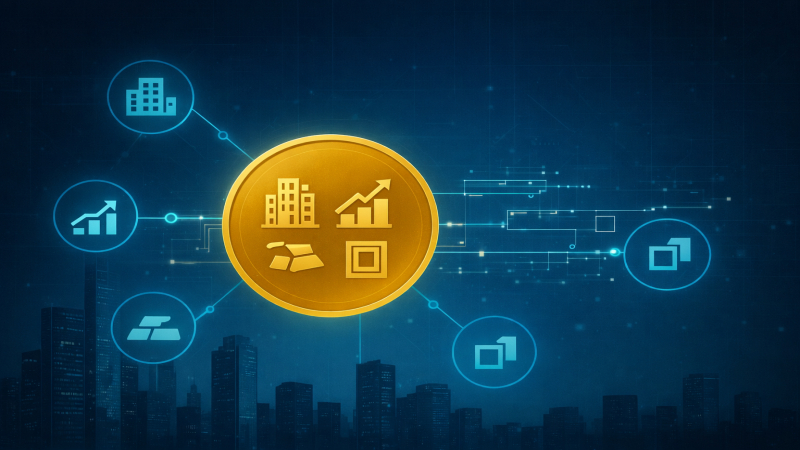
Tokenization is often framed as a disruptive force that will sweep away traditional financial markets. That framing misses the reality unfolding today. Markets are not being replaced. They are being rewired. Tokenized assets are changing how markets operate internally, not eliminating the structures that already exist.
This distinction matters because replacement implies rupture, while rewiring implies adaptation. Financial markets are deeply embedded in legal, regulatory, and institutional frameworks. Tokenization works best when it enhances those systems rather than attempting to bypass them. What is changing is how assets move, settle, and integrate across platforms.
Tokenization Is Enhancing Market Plumbing Not Dismantling It
At its core, tokenization improves the internal mechanics of markets. Settlement becomes faster, reconciliation more transparent, and ownership records more precise.
Traditional markets rely on layers of intermediaries to manage risk and coordination. Tokenized assets streamline these processes by aligning execution and settlement more closely. The trade still happens in familiar venues, but the back end becomes more efficient.
This is rewiring. The surface remains recognizable while the internal wiring improves.
Existing Market Roles Remain Intact
Despite fears of disintermediation, key market roles persist. Exchanges, custodians, brokers, and regulators still play central parts.
Tokenization does not remove the need for trust, oversight, or compliance. It changes how these functions are performed. Automation replaces manual processes, but accountability remains.
This continuity explains why institutions are willing to adopt tokenization. It fits within established responsibilities rather than threatening them.
Liquidity Patterns Are Being Reconfigured
Tokenized assets alter how liquidity forms and flows. Faster settlement reduces friction and encourages participation.
Markets can support more frequent transactions with less capital tied up. This improves depth without necessarily increasing risk.
Liquidity becomes more responsive because assets move more efficiently. This responsiveness changes trading behavior over time.
Market Access Expands Without Fragmentation
Tokenization allows assets to be accessed through multiple channels without creating separate markets.
An asset can be traded traditionally and settled digitally. This avoids fragmentation while expanding reach.
Participants choose the access point that fits their needs without changing the underlying market structure.
Data Transparency Improves Decision Making
Tokenized markets produce richer data. Ownership changes, settlement status, and transaction history become more visible.
This transparency enhances risk management and compliance. It also improves price discovery by reducing uncertainty.
Better data does not change markets overnight, but it steadily improves their function.
Regulation Evolves Alongside Technology
Regulatory frameworks are adapting to tokenized assets by extending existing principles rather than inventing entirely new regimes.
This continuity reinforces stability. Markets evolve within familiar boundaries.
Tokenization advances because it aligns with regulatory logic rather than challenging it directly.
Why Replacement Narratives Fall Short
Replacement narratives assume that efficiency alone drives change. In finance, trust and coordination matter as much as speed.
Markets are social and legal systems, not just technical ones. Tokenization respects this reality.
By rewiring rather than replacing, tokenization achieves adoption without destabilization.
Long Term Structural Impact
Over time, rewiring compounds. Settlement cycles shorten, operational costs fall, and integration improves.
These changes reshape market behavior gradually. Participants adapt workflows, expectations, and strategies.
The market looks the same, but it operates differently.
Conclusion
Tokenized assets will not replace financial markets. They will rewire them from the inside. By improving settlement, transparency, and efficiency, tokenization enhances existing structures rather than tearing them down. This quiet transformation is more durable than disruption. Markets evolve not by being erased, but by being upgraded.