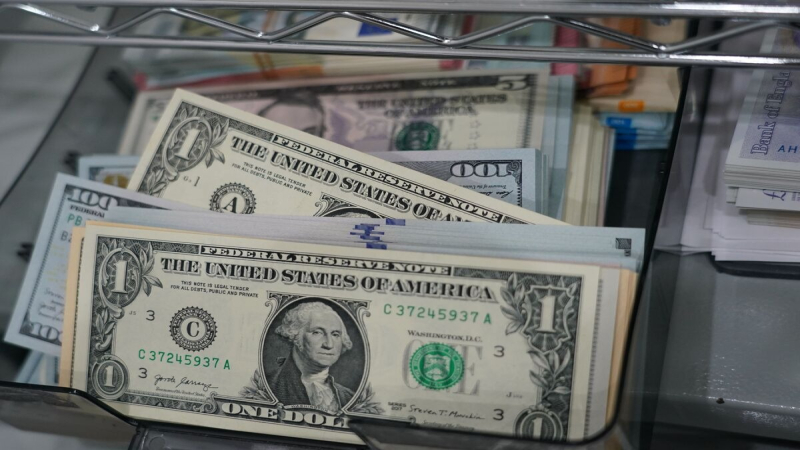
Currency strategists remain largely unconvinced that the U.S. dollar’s weakness is over, even as investors trim bets on rapid Federal Reserve rate cuts. A new global survey of major foreign-exchange forecasters shows traders continuing to hold net short positions against the greenback, suggesting the market still expects more softness ahead.
The poll, completed between October 31 and November 5, 2025, covered 45 FX specialists from leading banks and research firms. Around two-thirds of them, 30 respondents, said they expect traders to maintain net short positioning through November. Although the dollar has already regained some ground since late summer, the overall outlook remains tilted toward moderate bearishness.
The shift in sentiment partly reflects changing expectations about the Fed’s next move. Market pricing now implies about a 70 percent chance of a rate cut in December, down from nearly 90 percent before the last policy meeting. That cooling optimism has stabilized the dollar index near its recent range after months of heavy selling that left it down roughly 8 percent for the year.
Strategists note that official position data from the Commodity Futures Trading Commission remains unavailable since late September, leaving investors reliant on alternative models. Several investment desks report that proprietary indicators now show dollar positioning as “lightly short,” with less extreme bearish exposure than earlier in 2025.
Still, the broad expectation among analysts is for a gradual slide in the greenback over the next year. Many cite diverging policy paths between the Fed and other major central banks. The European Central Bank’s stance, combined with expectations of fiscal expansion across the eurozone, has kept forecasts for the euro steady at 1.18 against the dollar within three months and 1.21 over twelve. In Asia, the yen and yuan are seen holding firm if U.S. yields continue to drift lower.
Political dynamics are also creeping into the discussion. With a presidential election year approaching, several respondents believe increased government focus on growth and spending could reinforce a weaker-dollar environment if fiscal policy offsets monetary tightening.
For traders, the near-term message is clear: the dollar’s downward bias persists, but the market is less one-sided than before. Any stronger-than-expected U.S. data or delayed rate cuts could spark a brief rebound through short covering. However, unless the Fed signals a decisive shift toward higher rates, the dollar’s long-term trend remains on the softer side.