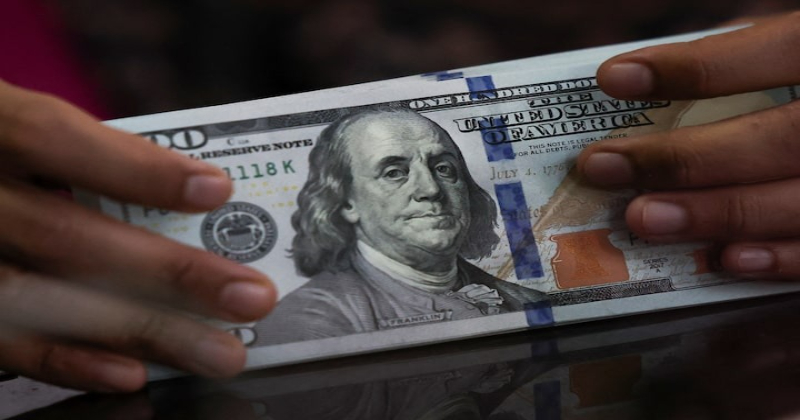
The U.S. dollar held firm in Friday’s Asian session as investors reacted to weaker-than-expected Chinese trade figures that reignited concerns about global demand. China’s customs data showed that exports fell by 1.1 percent year-on-year in October, while imports declined by 0.6 percent, underscoring a slower recovery in manufacturing and external demand. The data weighed on risk sentiment across Asia, prompting traders to seek safety in the greenback.
Currency analysts noted that the dollar’s recovery came as market participants scaled back exposure to higher-yielding assets. The move reflected caution following a series of mixed signals from global central banks. Asian equity markets edged lower as investors weighed the impact of weaker trade on regional supply chains and commodity demand. In response, the U.S. dollar index hovered near its weekly highs, gaining modestly against major peers including the yen and the Australian dollar.
The Chinese trade slowdown also reinforced worries about the global growth outlook. With export volumes down and demand from the U.S. and Europe softening, the world’s second-largest economy faces renewed pressure on its currency and industrial sector. Economists warned that further weakness in exports could limit Beijing’s room to ease policy aggressively, leaving markets dependent on incremental stimulus measures rather than broad interventions.
In the bond market, yields on U.S. Treasuries steadied after an early dip, helping the dollar maintain momentum. Investors are watching closely for fresh signals from Federal Reserve officials, who have hinted that rate cuts could come in 2026 if inflation continues to ease. For now, steady yields and cautious positioning are keeping demand for the dollar intact as a defensive play against economic uncertainty.
The greenback’s performance also reflected a broader rotation in global markets. The recent rally in technology and AI-linked equities lost steam this week, leading traders to rebalance portfolios toward safe-haven assets. Oil prices slipped below recent highs, and gold edged higher as investors reassessed near-term risk exposure.
As the trading week closes, the dollar’s resilience highlights how fragile global sentiment remains. A weak trade pulse from China, combined with shifting expectations for monetary policy, has once again positioned the U.S. dollar at the center of global capital flows. For investors navigating a volatile environment, the greenback continues to serve as both a hedge and a signal of market caution.