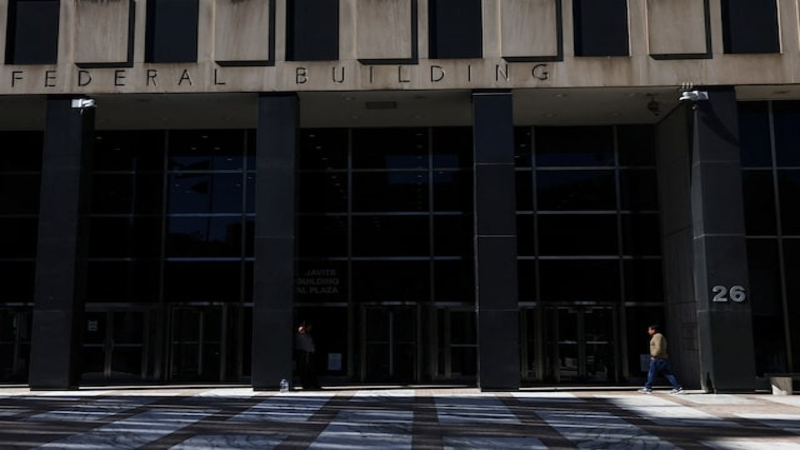
The size of the US federal workforce has fallen to its lowest level in at least ten years, marking a significant shift in the structure of the government as policy priorities change in 2026. Newly released figures show that staffing levels across federal agencies have declined broadly, reflecting a sustained effort to reduce the scale of the public sector. The move represents a departure from the long standing view of federal employment as a stable and expanding pillar of the US labor market. Instead, the workforce is contracting as efficiency and cost control take precedence. The reduction comes at a time when labor market dynamics are already under pressure from slowing growth and shifting fiscal policy. As federal employment retreats, attention is turning to how these changes may ripple through local economies that rely heavily on government jobs and related services.
The workforce cuts have not been evenly distributed, with several major departments experiencing particularly sharp declines. Agencies tied to domestic programs, including education, agriculture, and housing, have seen some of the largest proportional reductions in staff. These cuts suggest a rebalancing of government priorities away from certain public services and toward a leaner administrative footprint. In contrast, departments connected to border security and enforcement have remained comparatively stable, highlighting selective rather than uniform downsizing. The data points to a deliberate reshaping of the federal apparatus rather than temporary attrition. For agencies facing steep losses, the reductions raise questions about capacity, service delivery, and the longer term impact on policy execution. These changes are unfolding as agencies adapt to tighter budgets and new operational mandates.
Historically, federal employment has been characterized by long tenures and low turnover, offering job security even during economic downturns. The current trend challenges that assumption, signaling a more fluid and uncertain environment for government workers. Supporters of the reductions argue that a smaller workforce will improve efficiency and reduce costs for taxpayers. Critics warn that deep cuts could strain already stretched agencies and weaken institutional expertise. The decline also intersects with broader debates about the role of government in the economy, particularly as fiscal discipline becomes a central theme in policy discussions. As staffing levels fall, agencies may increasingly rely on automation, outsourcing, or private sector partnerships to maintain operations. These adjustments could permanently alter how public services are delivered in the years ahead.
From a market perspective, the shrinking federal workforce carries implications beyond politics. Government employment plays a meaningful role in overall labor statistics and consumer spending patterns, especially in regions with a high concentration of federal jobs. Fewer public sector workers could translate into softer demand in certain local economies, even as private sector hiring remains uneven. At the same time, reduced government payrolls may support efforts to rein in spending and influence longer term fiscal outlooks. Investors and economists are watching how these changes interact with monetary policy, growth forecasts, and labor market conditions. As 2026 unfolds, the contraction of the federal workforce stands out as a structural shift with consequences for governance, employment, and economic momentum.