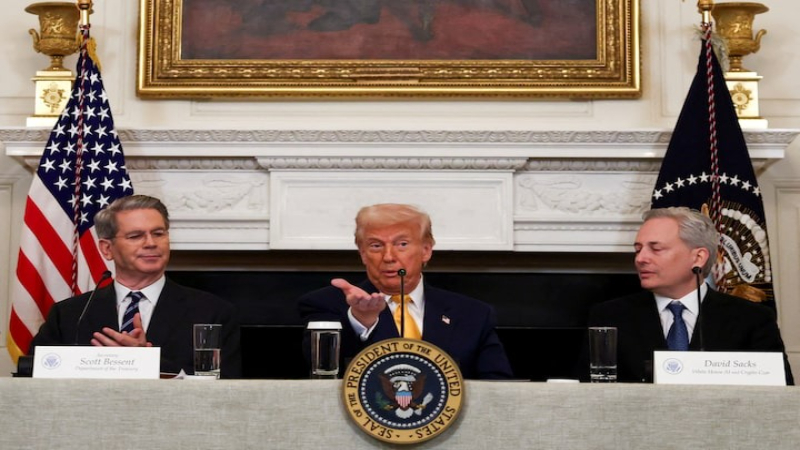
The United States is pursuing one of its most aggressive digital currency strategies in decades, betting that widespread adoption of dollar backed stablecoins could strengthen American monetary power and create trillions in new demand for U.S. Treasuries. Senior officials have argued that the expansion of dollar stablecoins could supercharge capital inflows, elevate the global reach of the dollar in its digital form and lower long term borrowing costs for the government. Supporters of this view point to forecasts suggesting stablecoin usage could surge to three trillion dollars by 2030, a scale similar to major rounds of quantitative easing. This line of thinking assumes that global appetite for digital dollars will rise inexorably as emerging markets seek more stable assets for payments, savings and cross border commerce. Yet behind the optimism, analysts are increasingly warning that the same dynamics that once drove analogue dollarisation may not repeat, especially if foreign governments decide to fortify their own financial systems rather than accept deeper dependence on the United States.
Dollarisation historically brought clear benefits to the U.S. but it imposed steep economic costs on other countries, particularly in regions where domestic currencies lacked stability. As the greenback spread through banking systems across Asia and South America, many governments faced pressure on monetary sovereignty and financial policy, creating powerful incentives to strengthen institutions. Over time central banks became more independent, inflation eased and local currencies regained credibility. As governance improved, households and businesses reduced their reliance on the dollar, causing levels of dollarisation to fall sharply in many cases. Analysts say the same logic applies in the digital era. Even if U.S. policy encourages global use of stablecoins, foreign governments have strong motivation to protect their own currencies by building competitive payment networks, improving regulatory clarity and maintaining fiscal discipline. If such efforts succeed, the reach of digital dollars may be far more limited than the most enthusiastic projections suggest, placing natural constraints on the inflows U.S. officials hope to attract.
Some economists warn that the United States risks triggering a scenario that not only limits the impact of its stablecoin strategy but potentially undermines the long term status of the dollar. Nations have expressed frustration for decades over reliance on U.S. controlled monetary infrastructure and the absence of a truly neutral alternative. Institutions such as the IMF’s special drawing right have never gained enough traction to rival the dollar, but growing dissatisfaction and technological innovation are once again raising the prospect of alternative systems. If Washington pushes too aggressively for stablecoin dominance, analysts say other countries could accelerate cooperation around supranational units of account or expand regional digital currency alliances. Such developments would threaten the very advantages the U.S. is attempting to amplify, potentially weakening future influence rather than strengthening it. While stablecoins undeniably offer efficiency and new channels for global liquidity, the world’s response will determine whether the American strategy becomes a breakthrough or a geopolitical miscalculation.