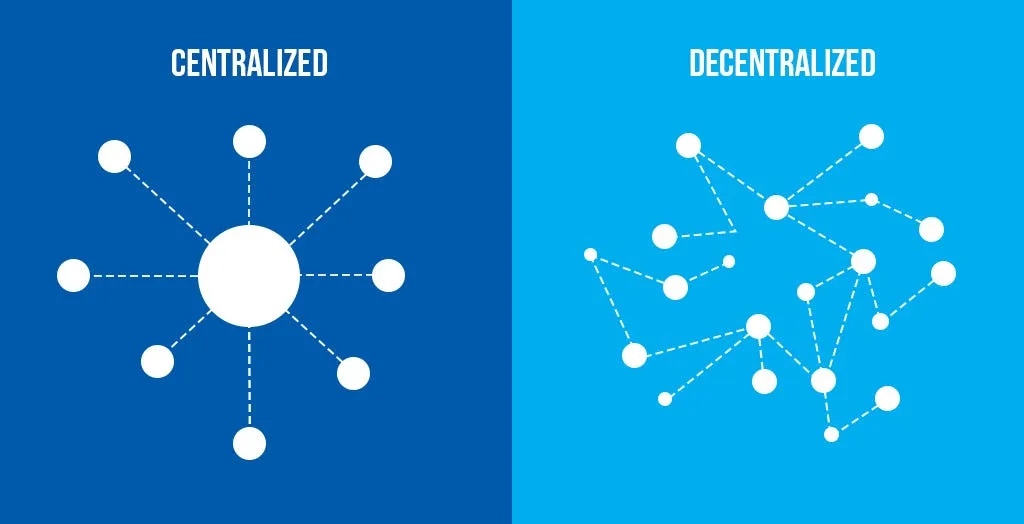
The global financial system is undergoing a quiet structural shift. Instead of operating as a tightly integrated whole, it is increasingly breaking into modular components that can function independently yet connect when needed. This change is not ideological or theoretical. It is driven by efficiency, resilience, and the need to adapt to a more fragmented economic environment.
Modularity allows financial functions to be separated, upgraded, or replaced without overhauling the entire system. Payments, settlement, liquidity provision, compliance, and risk management are no longer bound to single institutions or unified frameworks. They are becoming interchangeable parts within a broader network.
Modularity Reduces Systemic Fragility
The most important reason the system is becoming modular is risk management. Highly centralized systems are efficient during stable periods but fragile during stress. When one component fails, the impact spreads quickly.
Modular systems limit this contagion. If one layer experiences disruption, others can continue operating. Payments can function even if lending tightens. Settlement can continue even if one intermediary steps back.
This design improves resilience. It allows markets to absorb shocks without cascading failures. In a world shaped by frequent disruptions, resilience has become as valuable as efficiency.
Policy Fragmentation Accelerates Modular Design
Global policy coordination has weakened over time. Monetary, regulatory, and fiscal frameworks increasingly diverge across regions. A modular system adapts more easily to this reality.
Instead of forcing uniform rules across jurisdictions, modularity allows local compliance while maintaining global connectivity. Systems plug into each other through standardized interfaces rather than shared governance.
This approach reduces friction. Financial activity continues across borders even when policy paths differ. Modularity becomes a practical response to geopolitical and regulatory fragmentation.
Technology Makes Modular Finance Possible
Advances in technology have made modular design feasible at scale. Digital settlement, programmable interfaces, and automated compliance tools allow financial components to operate independently while remaining interoperable.
This flexibility was not possible in legacy systems built around centralized processing. Today, functions can be updated or optimized without disrupting the entire stack.
Technology enables specialization. Each module can focus on doing one job well, whether that is settlement speed, risk assessment, or identity verification.
Institutions Are Unbundling Their Own Functions
Financial institutions themselves are contributing to modularization. Banks, funds, and market operators increasingly unbundle internal functions to improve efficiency.
Rather than relying on integrated systems, they adopt specialized providers for payments, custody, analytics, or compliance. This allows faster innovation and cost control.
Unbundling also reduces dependency. Institutions avoid concentration risk by diversifying how critical functions are delivered. This mirrors the broader system trend toward modularity.
Liquidity and Settlement Are Leading the Shift
Liquidity and settlement are at the forefront of modular transformation. These functions benefit most from independence and speed.
Separating settlement from balance sheet heavy institutions reduces bottlenecks. Liquidity can flow through specialized channels designed for rapid movement rather than long term storage.
This separation improves transparency and reduces operational risk. It also allows markets to function more continuously rather than within fixed institutional boundaries.
Modularity Changes How Trust Is Built
In a modular system, trust is no longer concentrated in a single institution. It is distributed across processes, standards, and verification mechanisms.
Participants trust that each module performs its role reliably. Oversight focuses on interfaces rather than entire organizations. This shifts accountability from size to function.
Trust becomes operational rather than reputational. Systems are trusted because they work consistently, not because they are centralized.
Challenges Remain in Coordination
Modularity introduces complexity. Coordinating independent components requires clear standards and governance. Without them, fragmentation can lead to inefficiency.
Ensuring interoperability while maintaining security is an ongoing challenge. Modular systems must balance flexibility with coherence.
However, these challenges are manageable. They are addressed through shared protocols and oversight rather than forced centralization.
What This Means for the Future of Finance
A modular financial system adapts faster. Components evolve without destabilizing the whole. Innovation accelerates where it is needed most.
Over time, this design reshapes competition. Institutions and platforms compete on function rather than scope. Efficiency replaces size as the primary advantage.
The system becomes less monolithic and more adaptive. This suits a world where change is constant and uncertainty is persistent.
Conclusion
The global financial system is becoming modular because resilience, adaptability, and efficiency now matter more than uniformity. By breaking into flexible components, finance can evolve without repeating the fragility of tightly coupled systems. Modularity is not a trend. It is a structural response to how the world now works.