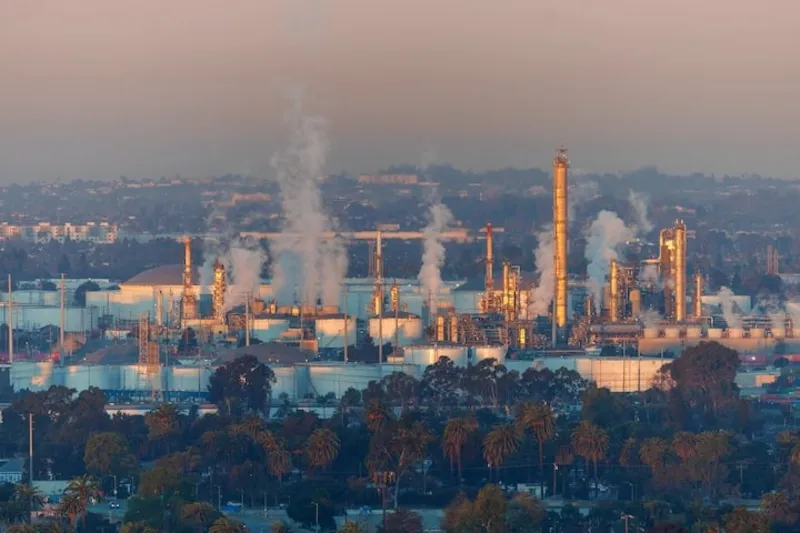
Fuel prices in California are rising sharply as geopolitical tensions linked to the conflict involving Iran place additional pressure on global energy markets and regional refining capacity. Analysts warn the situation could push gasoline prices in the state to unprecedented levels if supply disruptions continue. California already has some of the highest fuel costs in the United States, but new pressures tied to oil shipping routes and refining limitations are making the situation more severe. Energy economists say the state’s unique fuel regulations and limited pipeline connections isolate its fuel market from the rest of the country, increasing its dependence on imported crude and refined products.
Recent data shows that average gasoline prices in California have climbed significantly in recent weeks. The price of regular fuel reached about 5.42 dollars per gallon, far above the national average which remains closer to 3.63 dollars. Aviation fuel has also experienced dramatic increases, particularly around Los Angeles where jet fuel prices have jumped more than forty percent in just two weeks. These increases reflect tightening global supply conditions after tensions in the Middle East began affecting shipping and refining operations tied to crude oil exports.
California’s energy market structure has made it particularly vulnerable to supply disruptions. Unlike many other regions of the United States, the state cannot easily receive refined fuel from domestic markets through pipelines. Instead it relies heavily on shipments from overseas suppliers, particularly refineries in Asia. When global oil flows become unstable or shipping routes face disruption, California often feels the impact more quickly than other parts of the country. The Strait of Hormuz remains one of the most critical global oil transit routes, and any threat to vessels moving through the area can quickly tighten supply across international energy markets.
Refining capacity on the United States West Coast also plays a major role in the current situation. Over the past several years some refineries in California have closed or shifted production toward renewable fuel alternatives as part of broader energy transition policies. As a result the state has become more reliant on imported crude oil and refined fuel products. West Coast refineries import large volumes of Middle Eastern crude, accounting for roughly half of the region’s total imports from that area. Analysts say any disruption to these supplies forces refiners to seek alternative barrels that are often more expensive.
Energy market experts warn that competition for available crude oil is intensifying globally. Refineries in Asia are also experiencing supply shortages and are scrambling to secure alternative shipments of crude oil. Some refineries in China, South Korea and India have already reduced production due to limited access to Middle Eastern supplies. At the same time several exporting countries have reduced or suspended fuel shipments in order to protect their own domestic markets. This tightening global supply environment is contributing to rising prices for heavier crude oils that many refineries require.
California refiners may attempt to increase imports from other regions including Canada and parts of Latin America, but available supply is limited. Pipeline capacity constraints and strong demand from international buyers restrict how much additional oil can be redirected to the West Coast. Some analysts say refiners could also increase purchases of crude produced in Alaska or consider shipments from Venezuela if logistical barriers can be managed. However these alternatives may only partially offset the loss of supply linked to Middle Eastern disruptions.
Government officials are exploring possible policy responses that could ease some of the pressure on California’s fuel market. One option under consideration involves temporarily adjusting maritime shipping rules that require domestic oil shipments to use United States flagged vessels, a requirement that can significantly increase transport costs. Relaxing those restrictions could allow crude oil from the Gulf Coast to reach California more easily and help stabilize supply conditions if global disruptions persist.