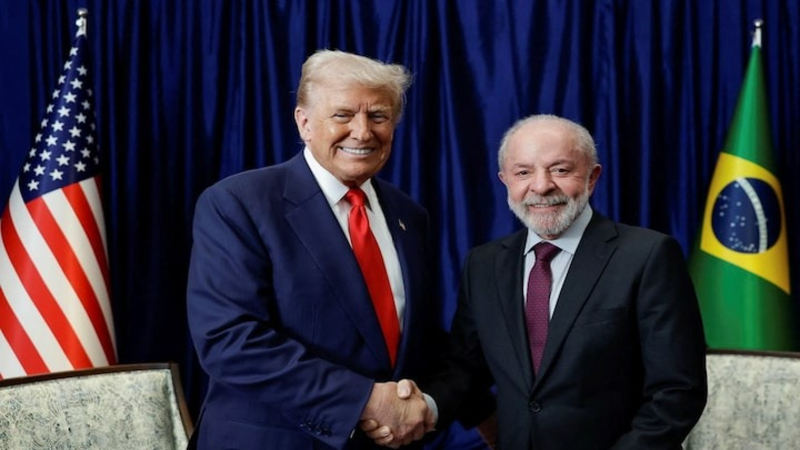
Brazil’s President Luiz Inácio Lula da Silva said on Tuesday he will place a direct call to U.S. President Donald Trump if bilateral negotiations between their governments do not advance by the end of the COP30 climate summit this month.
Lula made the remark in the city of Belém, host of the COP30 talks. He pointed out that he left his October meeting in Malaysia with Trump confident that an agreement would be reached. “It was very important that our negotiators start talking soon,” he told reporters.
The two leaders had met in October in Kuala Lumpur amid escalating trade tension. In August, the U.S. raised tariffs on most Brazilian imports from 10 percent to 50 percent, a move that triggered concerns across Latin America.
Lula said his vice-president, Geraldo Alckmin, and Finance Minister Fernando Haddad are ready to travel to the United States for a new round of talks if required. He added that if his negotiators and their counterparts in Washington fail to schedule a meeting by the time COP30 wraps up, he will make the call himself.
Analysts say the president’s remarks underscore the growing urgency attached to U.S.-Brazil economic relations. Brazil is Latin America’s largest economy and the trade conflict with the U.S. threatens export flows and investor sentiment alike. Washington’s tariff escalation adds pressure on Brazil’s domestic policy makers to respond.
In his address, Lula stressed that Brazil does not seek confrontation but expects meaningful dialogue. With Brazil’s exporters facing elevated U.S. import taxes, the government is pressing for immediate opening of negotiations. The potential travel to Washington by top Brazilian officials signals heightened priority.
For corporate investors and commodity traders tracking cross-border trade dynamics the situation is significant. A stalled dialogue could prompt retaliatory measures or trigger broader ripple effects across Latin American markets. Brazil is influential in the BRICS bloc and its treatment of U.S. trade action carries implications for emerging-market risk.
As COP30 progresses, all eyes will turn to whether a meeting is set up or whether Lula moves ahead with his planned call to Trump. The outcome will help determine whether U.S.-Brazil relations shift toward cooperation or further strain in the coming year.